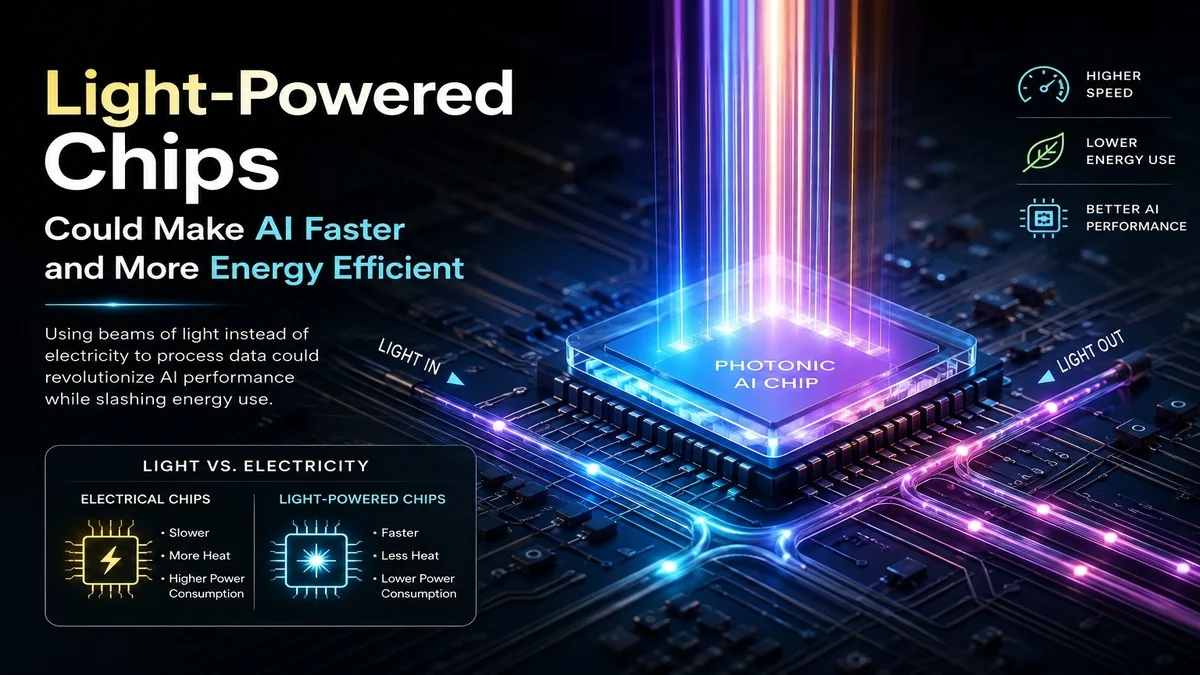
Light-Powered Chips Could Make AI Faster and More Energy Efficient
 By Inflix
 Light-powered AI chips could become one of the biggest breakthroughs in future computing. As artificial intelligence grows, companies need faster chips, lower power use and better cooling. However, traditional electronic chips are already under huge pressure because AI models need massive amounts of data processing.
Now, researchers are exploring a different path: using light instead of only electricity. This technology is often called photonic computing, and it could help AI systems work faster while using less energy.
Recent research has shown that light-based chips can generate, control and read optical information on tiny devices. Monash University researchers recently reported a small chip that can handle light-based information in one integrated system, which may support future ultra-fast and energy-efficient computing.
What Are Light-Powered AI Chips?
Light-powered AI chips are computer chips that use photons, or particles of light, to move or process information. Normal chips mostly use electrons moving through circuits. However, light can travel extremely fast and can carry large amounts of information at once.
This is why photonic chips are now becoming important for AI, data centres, quantum computing and high-speed communication.
In simple words, a light-powered AI chip may do some AI calculations using optical signals instead of only electrical signals. As a result, it could reduce heat, improve speed and lower energy demand.
Why AI Needs More Energy-Efficient Chips
AI is becoming more powerful, but it is also becoming more expensive to run. Large AI models need huge data centres, advanced GPUs and constant cooling. Therefore, energy efficiency is now one of the biggest challenges in AI hardware.
The University of Sydney recently said AI is increasingly constrained by energy consumption, while its researchers worked on ultra-compact photonic AI chips designed for faster and more efficient processing.
This matters because future AI tools will not only run in large data centres. They may also run on smartphones, smart glasses, laptops, cars and edge devices. Therefore, smaller and cooler AI chips could make a big difference.
For more mobile AI updates, you can also read our guide on future smartphone AI features.
How Light Makes AI Chips Faster
Photonic chips can move data using light waves. Because light can carry information across different wavelengths, these chips may handle many operations in parallel.
This is useful for AI because many AI tasks depend on matrix calculations, pattern recognition and large-scale data movement. If light-based systems can perform these tasks efficiently, AI chips may become much faster.
MIT researchers have also developed a fully integrated photonic processor that performs key deep learning computations using light. According to MIT, this type of chip could improve speed and energy efficiency for demanding AI tasks such as lidar, navigation and scientific research.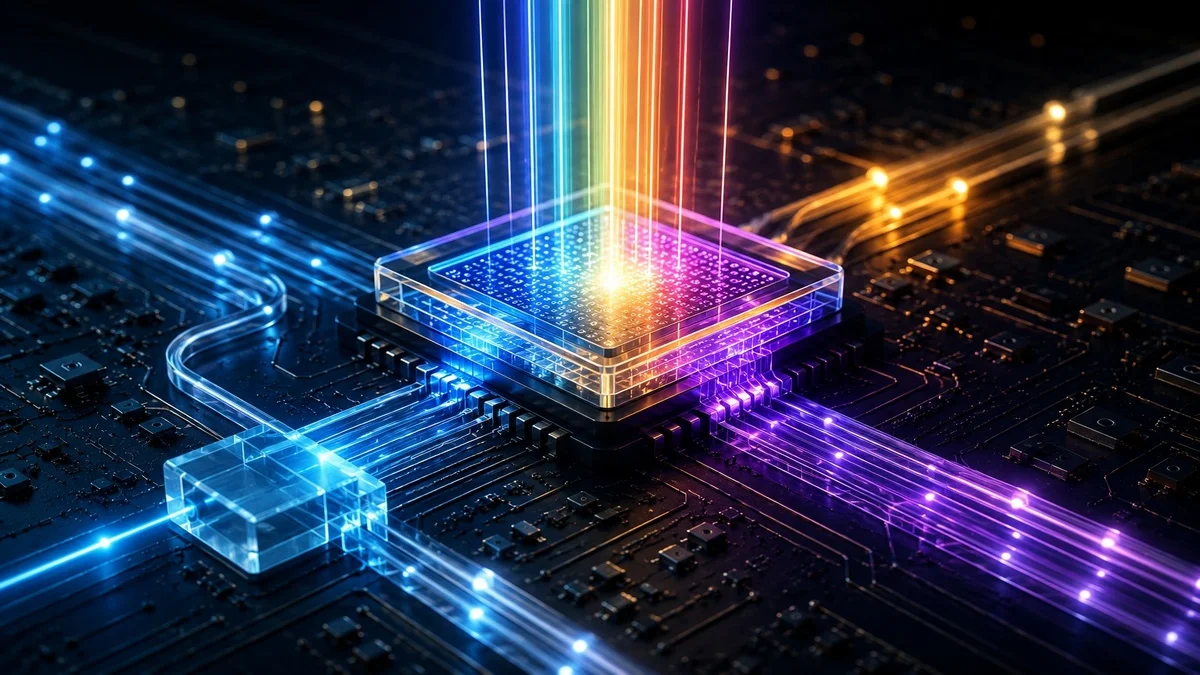
Could Light-Powered Chips Reduce AI Power Use?
Yes, that is one of the biggest reasons researchers are interested in this technology. Electronic chips produce heat as electricity moves through circuits. More heat means more cooling, and more cooling means higher energy costs.
Light-powered AI chips may reduce this problem because optical signals can transfer data with less resistance. Therefore, they may help AI systems run cooler and more efficiently.
In 2025, researchers at the University of Florida built a chip that used light for a core AI function. The report said the approach could make AI processing far more energy efficient while keeping high accuracy.
Why This Technology Matters for Data Centres
Data centres are the backbone of modern AI. Every chatbot, image generator, search tool and cloud AI system depends on powerful servers. However, these servers use a lot of electricity and cooling.
Light-powered AI chips could help solve two major problems at once. First, they could process information faster. Second, they could reduce the energy needed for AI workloads.
This is why silicon photonics is becoming an important part of next-generation AI infrastructure. It can help move data faster between chips, servers and networks. As a result, AI systems may become more scalable and less wasteful.
Are Light-Powered AI Chips Ready for Phones?
Not yet. This technology is still developing, and most current research is focused on labs, data centres, AI accelerators and specialist computing systems.
However, the long-term impact could reach consumer devices. For example, future smartphones may use more efficient AI processors for on-device AI features. This could improve battery life, image processing, voice assistants and real-time translation.
Still, it may take years before fully light-powered AI chips appear inside everyday phones. For now, the technology is more likely to help cloud AI and high-performance computing first.
China Is Also Betting on Photonic Chips
Photonic computing is not only a research topic. It is also becoming a strategic technology. China recently opened its first dedicated photonic computing lab in Shanghai, backed by Shanghai Jiao Tong University and Lightelligence. The project shows how countries are investing in light-based chips as future alternatives to traditional AI hardware.
This is important because AI chip supply chains are becoming more competitive worldwide. Therefore, photonic chips may become part of the next big race in semiconductor technology.
What Are the Main Challenges?
Although light-powered AI chips sound promising, they are not perfect yet. Researchers still need to solve several challenges before the technology becomes mainstream.
First, photonic chips must work reliably at scale. Second, they need to connect smoothly with today’s electronic systems. Third, manufacturing must become cheaper and more consistent.
In addition, AI software must be adapted for these new chip designs. Without strong software support, even powerful hardware can struggle to reach users.
What This Means for the Future of AI
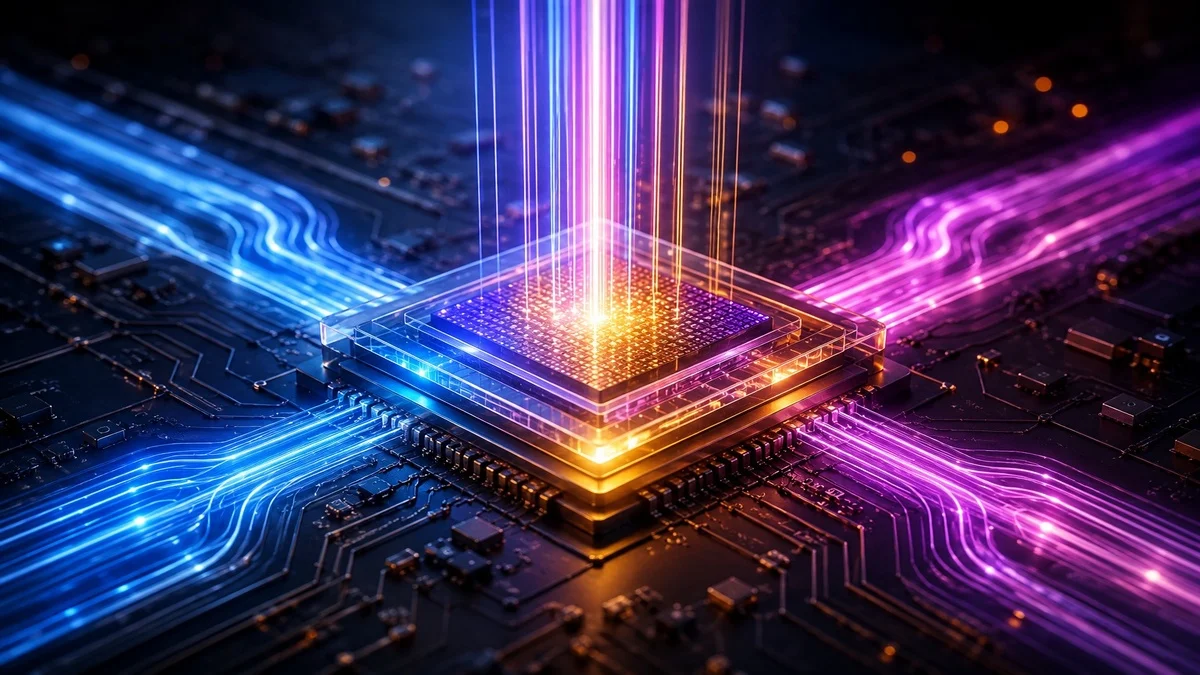
Light-powered AI chips could help shape the next generation of artificial intelligence. They may not replace all electronic chips, but they could work alongside them. For example, future systems may use electronics for control and photonics for high-speed AI calculations.
Overall, this could make AI faster, cheaper and more energy efficient. It could also reduce pressure on data centres and help bring stronger AI features to smaller devices.
For users, the result could be simple: faster AI tools, cooler devices, better battery life and smarter apps.
Final Thoughts
Light-powered AI chips are still new, but they already look important for the future of artificial intelligence. AI needs more speed, better efficiency and cooler hardware. Therefore, photonic computing could become a strong solution because it uses light to move and process data in a smarter way.
However, this technology may take time before it reaches everyday smartphones. At first, data centres, cloud AI systems and advanced computing platforms may benefit the most. Overall, light-powered AI chips could help make future AI faster, greener and more practical for users.
FAQs
What are light-powered AI chips?
Light-powered AI chips use light signals to move or process information. They are also called photonic AI chips.
Why are light-powered AI chips important?
They matter because AI needs faster and more energy-efficient hardware. As a result, photonic chips could help reduce power use and improve AI performance.
Can light-powered chips make AI faster?
Yes, light-powered chips can help AI process data faster because light can carry large amounts of information quickly.
Will light-powered AI chips improve phone battery life?
They may improve phone battery life in the future. However, this technology will likely reach data centres and advanced AI systems before smartphones.
Are photonic AI chips available now?
Some prototypes and research chips already exist. However, full photonic AI chips are not yet common in consumer devices.