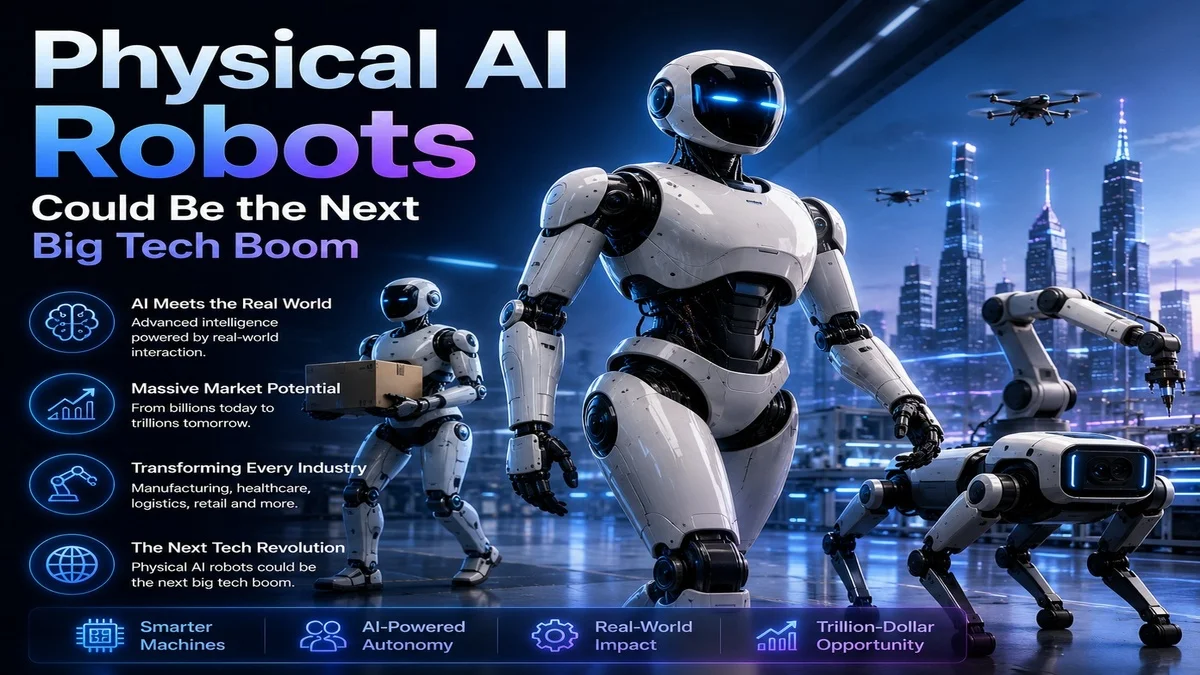
Physical AI Robots Could Be the Next Big Tech Boom
 By Inflix
 Physical AI robots could become the next big technology boom as artificial intelligence moves beyond screens, apps and chatbots. Until now, most people have used AI through text tools, image generators, voice assistants and software platforms. However, the next major shift may happen in the real world, where AI-powered robots can see, understand, decide and act.
This is why investors, tech companies and robotics startups are paying close attention to physical AI. According to Business Insider, investment in robotics and physical AI grew from $4 billion in 2019 to $26 billion in 2025, showing how quickly the sector is gaining momentum. This growth is being driven by advances in sensors, AI models, automation, labour shortages, supply chain needs and industrial demand. Business Insider
For Mobile Verse readers, this matters because the future of technology may not only be about faster phones or smarter apps. Instead, the next wave could be AI robots in warehouses, factories, hospitals, delivery systems, homes and even public spaces.
To understand how this technology works, readers can explore NVIDIA’s explanation of generative physical AI. In addition, the latest robotics investment trend has been covered in this Business Insider robotics report, which shows why physical AI is becoming a major area for investors and technology companies.
What Are Physical AI Robots?
Physical AI robots are machines powered by artificial intelligence that can interact with the physical world. Unlike normal software AI, physical AI must understand real environments, handle objects, move safely, and make decisions in real time.
NVIDIA describes physical AI as AI that allows machines such as humanoid robots and autonomous vehicles to perceive, understand, reason and interact with the real world. These systems need sensors, cameras, AI models, motor control and fast decision-making to work properly. NVIDIA
In simple words, chatbot AI thinks and responds on a screen. Physical AI robots think and act in real life.
That difference is huge. A robot in a warehouse cannot simply “try again” like a chatbot. It must avoid people, lift objects carefully, understand obstacles, and complete tasks safely. Therefore, physical AI is more complex than normal digital AI.
Why Physical AI Robots Are Getting So Much Attention
The main reason physical AI robots are becoming important is that many industries need automation that can work in real-world conditions. Traditional robots are already used in factories, but most of them follow fixed instructions. They are powerful, but they are not very flexible.
Physical AI changes that. Instead of only repeating one task, AI-powered robots can learn from data, understand surroundings and adapt to different situations.
For example, a warehouse robot may identify different package sizes, choose the right grip, avoid workers, and move through changing spaces. Meanwhile, a hospital robot may help transport supplies, guide patients, or assist staff with routine tasks.
As a result, companies see physical AI as a way to improve productivity, reduce repetitive work and manage labour shortages. In addition, robots can operate in dangerous or difficult environments where human workers may face higher risks.
AI Is Moving From Screens Into the Real World
Over the past few years, AI has mostly lived inside apps. People use AI to write emails, create images, summarise documents, generate code and answer questions. However, that is only one stage of AI growth.
The next stage is embodied AI, where artificial intelligence is connected to machines that can act in the real world. A 2026 paper on embodied AI explained that AI systems are moving from research into real systems such as autonomous vehicles, mobile robots and industrial machines. It also highlighted that safety, trust, governance and reliability are major challenges for real-world deployment. Embodied AI research paper
This is important because real-world AI must be more responsible than software-only AI. If an AI chatbot makes a mistake, the result may be a wrong answer. However, if an AI robot makes a mistake in a factory or hospital, the risk can be much higher.
Therefore, the physical AI boom will depend not only on intelligence but also on safety and trust.
Humanoid Robots Could Lead the Physical AI Boom
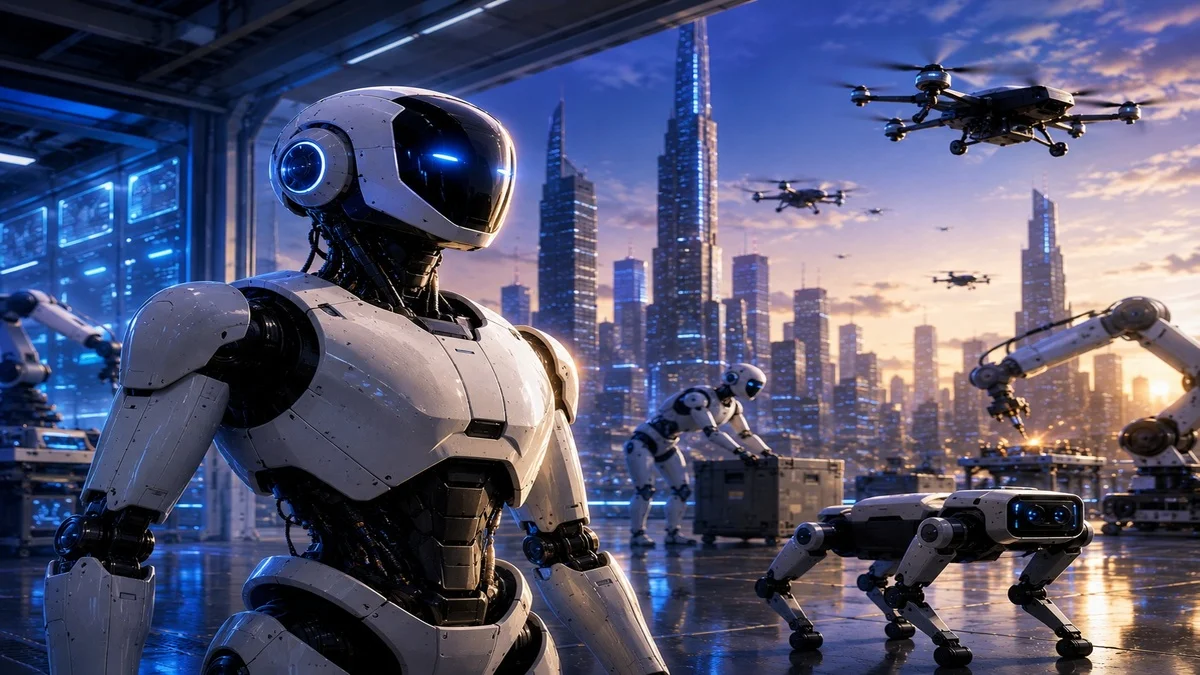
Humanoid robots are one of the most exciting parts of the physical AI trend. These robots are designed to look or move more like humans, which may make them useful in places already built for people.
For example, a humanoid robot could walk through a warehouse, use tools, open doors, carry boxes or work near humans without needing a fully redesigned environment. That is why companies are racing to build humanoid robots for factories, logistics and service jobs.
However, humanoid robots are still difficult to build. They need balance, hand control, vision, batteries, powerful AI models and safe movement. In addition, they must be affordable enough for businesses to buy at scale.
So, while humanoid robots may become a big part of the future, they are not ready to replace human workers everywhere. Instead, early versions may start with simple, repetitive or risky tasks.
Physical AI Robots in Factories and Warehouses
Factories and warehouses may be the first major places where physical AI robots become common. These environments have clear tasks, measurable productivity goals and strong demand for automation.
Robots can help with picking, packing, sorting, inspection, material handling and quality checks. In addition, AI-powered robots can work alongside human teams to reduce heavy lifting and repetitive work.
This is why warehouse automation is one of the strongest areas for robotics investment. Companies want faster supply chains, fewer delays and more reliable operations. Physical AI robots can help businesses respond to demand without depending only on manual labour.
However, businesses must still plan carefully. Robots need training, testing, maintenance and safety rules. Therefore, companies that rush into automation without a proper strategy may not get the results they expect.
Healthcare Robots Could Support Doctors and Nurses
Healthcare is another area where physical AI could become valuable. Hospitals and care centres often deal with staff shortages, high workloads and repetitive tasks.
AI-powered robots may help move medical supplies, deliver medicine, clean rooms, assist with patient guidance or support basic care tasks. In the future, more advanced robots could also help with rehabilitation, elderly care and remote medical support.
However, healthcare robots must meet very high safety standards. They need to be reliable, easy to control and trusted by medical staff. Because patient safety is critical, physical AI in healthcare will likely grow more slowly than warehouse or factory automation.
Still, the long-term opportunity is strong. If robots can safely handle routine tasks, doctors and nurses may have more time for patient care.
Physical AI Robots at Home
Many people imagine a future where robots help at home. A home robot could clean, organise items, help elderly users, monitor safety or support daily routines.
This idea is exciting, but home robots are also one of the hardest challenges in physical AI. Homes are messy, unpredictable and different from each other. A robot must understand furniture, pets, children, stairs, fragile items and human behaviour.
Because of this, early home robots may focus on limited tasks. For example, robot vacuums already work because their job is narrow and clear. More advanced home assistants will need much better AI, safer movement and lower prices before they become mainstream.
Therefore, physical AI robots may appear in factories and warehouses before they become common in normal homes.
Why Investors Are Betting on AI Robotics
Investors are interested in AI robotics because it connects two powerful markets: artificial intelligence and automation. Chatbots showed that AI can change software. Now, physical AI robots could show that AI can change labour, logistics, manufacturing and services.
Business Insider reported that investors are backing areas such as warehouse automation, humanoid robotics, autonomous vehicles, defence systems and AI models for general-purpose robots. This shows that physical AI is not one small trend. It is becoming a wider technology category. Business Insider robotics report
In addition, companies are looking for ways to make robots more flexible. If one robot can learn many tasks, the market becomes much bigger. That is why AI foundation models for robotics are getting attention.
The Biggest Challenges for Physical AI Robots
Although the future looks exciting, physical AI robots still face major challenges.
The first challenge is safety. Robots must work around people without causing harm. They need reliable sensors, strong testing and clear safety systems.
The second challenge is cost. Many advanced robots are expensive to build, repair and maintain. For mass adoption, prices must come down.
The third challenge is battery life. Robots need enough power to move, lift, process data and operate for long hours.
The fourth challenge is intelligence. A robot needs to understand real-world situations, not just follow simple commands. This is much harder than answering questions in a chat window.
The fifth challenge is public trust. People may worry about job losses, privacy, safety and how companies use robots. Therefore, businesses and governments will need clear rules for responsible deployment.
Will Physical AI Robots Replace Human Jobs?
Physical AI robots will likely change jobs, but they may not replace humans everywhere. In many industries, robots will handle repetitive, dangerous or physically demanding tasks first.
For example, robots may move heavy boxes, inspect equipment, transport supplies or work in hazardous locations. Meanwhile, humans may focus on supervision, customer service, creative work, maintenance and decision-making.
However, some jobs will be affected more than others. Warehouse work, manufacturing, logistics and basic service tasks may see faster automation. Because of this, workers may need new skills in robot operation, maintenance, AI supervision and technical support.
Overall, the job impact will depend on how companies adopt the technology. If used responsibly, physical AI robots could reduce dangerous work and improve productivity. However, if companies use robots only to cut labour costs, the social impact could become more controversial.
Physical AI Robots and the Future of Mobile Technology
Although physical AI robots may seem different from smartphones, they are connected to the wider mobile technology ecosystem. Robots need chips, sensors, cameras, wireless networks, edge AI, cloud systems and mobile apps for control.
Future users may manage robots through phones, wearables or voice assistants. Businesses may also use mobile dashboards to monitor robot fleets in factories or warehouses.
In addition, 5G and future 6G networks could help robots communicate faster and operate more safely in complex environments. This means mobile technology will still play a major role in the robotics boom.
For more future technology coverage, you can also read our Mobile Verse article on AI smart glasses and the future of smartphones. You may also like our coverage of Google Gemini and AI-powered technology.
Are Physical AI Robots the Next Big Tech Boom?
Yes, physical AI robots could become one of the next major technology booms. The reason is simple: AI is no longer limited to digital tasks. It is moving into machines that can work in the real world.
Factories, warehouses, hospitals, defence, transport and homes could all be affected. However, the boom will not happen overnight. Robots need to become safer, cheaper, smarter and more reliable before they reach mass adoption.
Still, the direction is clear. AI started by helping people write, search and create. Now, it may start helping machines move, lift, build, deliver and care.
That is why physical AI robots are becoming one of the most important future technology trends to watch.
For more future technology coverage, you can also read our Mobile Verse article on AI smart glasses and the future of smartphones. You may also like our coverage of Google Gemini and AI-powered technology, where we explain how AI is moving into real-world experiences.
Final Thoughts
Physical AI robots could be the next big tech boom because they bring artificial intelligence into the real world. Instead of only answering questions on a screen, AI-powered robots can understand environments, move through spaces and complete physical tasks.
The opportunity is huge, especially in factories, warehouses, healthcare, logistics and future homes. However, the risks are also real. Safety, cost, trust, battery life and job impact must be handled carefully.
Overall, physical AI is not just another tech buzzword. It could become the next major stage of artificial intelligence, where smart machines move from digital screens into everyday life.
FAQs
What are physical AI robots?
Physical AI robots are AI-powered machines that can sense, understand and act in the real world. They use cameras, sensors, robotics hardware and AI models to complete physical tasks.
Why are physical AI robots important?
Physical AI robots are important because they can bring AI into factories, warehouses, hospitals, transport systems and homes. They could improve productivity and reduce repetitive or dangerous work.
Are humanoid robots part of physical AI?
Yes, humanoid robots are part of physical AI. They use artificial intelligence to move, understand surroundings and complete tasks in spaces designed for humans.
Will physical AI robots replace jobs?
Physical AI robots may replace some repetitive or dangerous tasks, but they may also create new jobs in robot maintenance, AI supervision, safety management and automation support.
When will physical AI robots become common?
Physical AI robots may become common first in warehouses, factories and industrial spaces. Home robots may take longer because homes are more unpredictable and harder for robots to understand.