AI Data Centres Are Becoming the New Power Race in Tech
 By Inflix
 AI data centres are quickly becoming the new power race in technology. For years, the biggest tech battles were about smartphones, apps, chips and cloud services. However, the next major competition may be about something much bigger: who can build enough data centres, power systems, cooling technology and AI chips to run the future of artificial intelligence?
Recently, Schneider Electric and Foxconn announced a partnership to develop next-generation AI data centre infrastructure, including modular power systems, cooling solutions and faster deployment methods. You can read more in this AI data centre infrastructure report. Schneider Electric also explains why power and liquid cooling are becoming important for high-density AI workloads in its AI factories and liquid cooling guide.
AI is no longer just a software trend. Every chatbot, image generator, AI search tool, coding assistant and business automation platform needs huge computing power behind the scenes. As a result, companies are racing to build stronger AI infrastructure that can handle larger models, faster responses and millions of users at the same time.
This is why AI data centres are now one of the most important parts of the tech industry. Without them, the AI boom cannot continue at the same speed.
Recently, Schneider Electric and Foxconn announced a partnership to develop next-generation AI data centre infrastructure, including modular power systems, cooling solutions and faster deployment methods. You can read more about the partnership in this AI data centre infrastructure report. In addition, Schneider Electric also explains why integrated power and liquid cooling are becoming critical for high-density AI workloads on its AI factories and liquid cooling guide.
What Are AI Data Centres?
AI data centres are specialised facilities designed to run artificial intelligence workloads. They use powerful servers, GPUs, advanced networking systems, high-speed storage, cooling technology and large amounts of electricity.
A normal data centre may run websites, apps, emails and cloud storage. However, an AI data centre is built for heavier tasks such as training AI models, running AI chatbots, processing images, powering voice assistants and supporting real-time AI tools.
The biggest difference is intensity. AI workloads need more power, more heat management and more advanced chips than many traditional cloud services. Therefore, AI data centres must be designed differently from older data centre facilities.
In simple words, if AI is the brain of the future internet, AI data centres are the engine rooms that keep that brain running.
Why AI Data Centres Are Becoming a Power Race
The phrase “power race” has two meanings here. First, tech companies need more computing power. Second, they also need more electrical power.
AI models need huge amounts of processing capacity. Large language models, image generators and enterprise AI tools depend on thousands of chips working together. As demand grows, companies need more servers and more energy to keep those servers running.
This is why the race is no longer only about who has the best AI software. It is also about who has access to enough GPUs, land, electricity, cooling systems and cloud infrastructure.
Companies that can build efficient AI data centres may get a major advantage. They can train models faster, serve customers better and reduce operating costs. On the other hand, companies that cannot secure enough infrastructure may fall behind.
Schneider Electric and Foxconn Show Where the Market Is Going
The partnership between Schneider Electric and Foxconn is important because it shows how serious the AI infrastructure race has become. Foxconn is known for manufacturing and electronics production, while Schneider Electric focuses on power management, energy systems and data centre infrastructure.
Together, they plan to develop modular AI data centre systems. This matters because companies want faster ways to build AI infrastructure without waiting years for traditional construction.
Modular systems can help businesses deploy power and cooling equipment more quickly. In addition, they can make AI data centres easier to scale as demand grows.
This type of partnership also shows that AI is creating opportunities outside software. Power companies, cooling specialists, chip makers, manufacturers, construction firms and energy providers are all becoming part of the AI economy.
AI Chips Are Driving the Data Centre Boom
AI chips are one of the main reasons AI data centres are growing so fast. Advanced GPUs and AI accelerators are needed to train and run powerful AI models.
These chips are much more demanding than normal computer processors. They generate a lot of heat and require strong cooling. They also need high-speed networking so thousands of chips can work together efficiently.
Because of this, the data centre industry is changing. Companies can no longer build basic server rooms and expect them to handle modern AI workloads. Instead, they need high-density racks, liquid cooling, stronger power delivery and smarter energy management.
This is why AI chips, data center cooling, and electricity supply are now deeply connected.
Cooling Technology Is Now a Major Tech Issue
Cooling has become one of the biggest challenges for AI data centres. When thousands of powerful chips run at the same time, they create a huge amount of heat. If that heat is not controlled properly, performance can drop and equipment can fail.
Traditional air cooling may not be enough for the most advanced AI workloads. Therefore, many companies are moving toward liquid cooling and other advanced cooling methods.
Liquid cooling can remove heat more efficiently from high-performance servers. This helps data centres run denser AI workloads without overheating. As a result, cooling technology is becoming just as important as chips and software.
In the future, the best AI companies may be the ones that can manage heat, energy and computing power together.
AI Data Centres Need Huge Amounts of Electricity
The growth of AI data centres is also putting pressure on electricity grids. AI workloads require constant power, and large data centres can use as much electricity as small towns.
This creates a serious challenge. Tech companies want to build more AI infrastructure, but local power grids may not always be ready for such high demand.
As a result, many firms are now looking at renewable energy, battery storage, microgrids and more efficient power systems. Some companies may also choose locations based on where electricity is cheaper, cleaner or more reliable.
This means AI growth is becoming an energy story as much as a technology story.
Why Cloud Companies Are Spending Big
Cloud companies are spending heavily on AI infrastructure because demand is rising across almost every industry. Businesses want AI tools for customer service, software development, marketing, healthcare, finance, education and data analysis.
To support this demand, cloud providers need more AI data centres. They also need faster networks, more GPUs and better storage systems.
This creates a strong business opportunity. Companies that control AI cloud infrastructure can sell computing power to startups, enterprises, governments and developers.
Therefore, the AI data centre race is similar to the early cloud computing race. The companies that build the strongest infrastructure may control a large part of the next digital economy.
AI Data Centres Could Change Where Tech Hubs Grow
AI data centres may also change the geography of the tech industry. In the past, software companies often needed offices in major cities. However, data centres depend on different things: power availability, land, cooling conditions, fibre connections and government support.
This means new technology hubs may grow in places with strong energy infrastructure. Regions with cheap renewable energy, reliable grids and available land could become more attractive.
At the same time, local communities may raise concerns about water usage, electricity demand, noise and environmental impact. Therefore, companies will need to work more carefully with governments and residents.
AI infrastructure growth will not be only about building fast. It will also be about building responsibly.
The Environmental Challenge of AI Data Centres
The rise of AI data centres brings a major environmental question. Can the world keep expanding AI without creating too much pressure on energy and water resources?
Many data centres need electricity for servers and cooling. Some cooling systems also use water, which can become controversial in areas facing drought or resource pressure.
This is why sustainable AI infrastructure is becoming important. Companies are now focusing on energy-efficient chips, better cooling systems, renewable power and smarter workload scheduling.
If AI data centres become more efficient, they can support innovation with less environmental impact. However, if growth happens too quickly without proper planning, energy demand could become a serious problem.
Why AI Data Centres Matter for Everyday Users
Many people may think data centres are only important for big companies. However, they affect everyday users more than most people realise.
When you use an AI chatbot, generate an image, ask a voice assistant a question or use AI search, a data centre is doing the work in the background. If data centres are faster, your AI tools feel quicker. If data centres are overloaded, services can become slower or more expensive.
In addition, the cost of AI infrastructure may affect subscription prices. If chips, power and cooling become more expensive, AI companies may charge more for premium tools.
So, even normal users are connected to the AI data centre race.
AI Data Centres and the Future of Smartphones
AI data centres also matter for smartphones. Many mobile AI features run partly on-device and partly in the cloud. For example, a phone may handle simple AI tasks locally, while heavier tasks may need cloud processing.
As mobile AI becomes more advanced, phones will need stronger links to cloud AI infrastructure. Features like AI photo editing, voice assistants, real-time translation, personal AI agents and smart search may all depend on powerful back-end systems.
This means future smartphones will not only compete on cameras and battery life. They may also compete on how well they connect with AI cloud services.
For Mobile Verse readers, this is important because the future of mobile technology will depend on both device chips and cloud infrastructure.
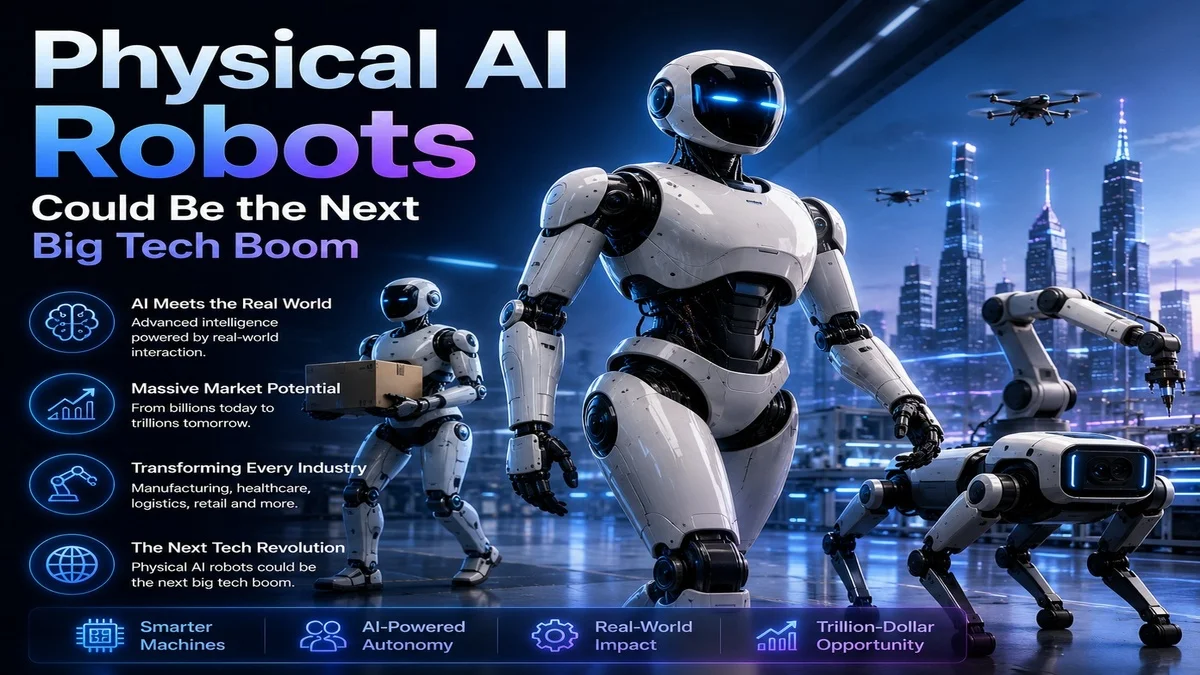
This also connects with the wider future of mobile technology. For example, Mobile Verse has already covered how physical AI robots could become the next tech boom, and that trend will also need stronger chips, faster networks and better AI infrastructure. In the same way, our article on AI smart glasses and the future of smartphones explains how AI may move beyond normal screens and depend more on cloud-powered intelligence.
The Role of 5G and Future Networks
5G and future 6G networks could also support the growth of AI data centres. Faster networks can help devices send and receive AI data more quickly. This can improve real-time AI tools, cloud gaming, augmented reality, smart factories and connected vehicles.
For example, an AI assistant on a phone may process some tasks locally and send more complex tasks to a cloud data centre. A faster network can make that experience feel smoother.
In the long term, edge data centres may also become more important. These smaller facilities are located closer to users, reducing delays and improving response times.
This could make AI feel faster and more natural in daily life.
What Makes an AI Data Centre Different From a Normal Data Centre?
A normal data centre is usually built for general digital services. It may host websites, business software, cloud storage and apps.
An AI data centre is designed for much heavier computing. It needs high-performance GPUs, faster networking, stronger cooling and more power. It also needs systems that can handle large AI models and huge amounts of data.
Because of this, AI data centres are more expensive and more complex to build. However, they are also more valuable because they power the fastest-growing area in technology.
This is why companies are treating AI infrastructure as a strategic asset.
Risks of the AI Data Centre Race
The AI data centres boom also brings risks. The first risk is energy pressure. If too many facilities are built too quickly, local grids may struggle.
The second risk is cost. AI infrastructure is expensive, and not every company will be able to compete.
The third risk is centralisation. If only a few large companies can afford massive AI data centres, they may gain too much control over the AI market.
The fourth risk is environmental impact. Water use, heat, emissions and land demand must be managed carefully.
The fifth risk is overbuilding. If companies build too much infrastructure before demand is stable, some projects may become financially risky.
Therefore, the AI data centre boom must be handled with smart planning, not just speed.

Why This Topic Is Bigger Than Chatbots
AI data centres show that artificial intelligence is bigger than chatbots. Chatbots are only the visible part of the AI industry. Behind them is a huge infrastructure system made of chips, servers, cooling systems, energy contracts and cloud platforms.
This is similar to the internet boom. Users saw websites and apps, but the real growth also depended on fibre networks, servers, cloud platforms and data centres.
Now, AI is creating a similar infrastructure boom. The companies that build the foundation may become some of the biggest winners in the next decade.
Final Thoughts
AI data centres are becoming the new power race in tech because artificial intelligence needs more than smart software. It needs chips, electricity, cooling, cloud platforms and massive infrastructure.
The Schneider Electric and Foxconn partnership is a clear sign that companies are preparing for the next stage of AI growth. The winners of this race may not only be the companies with the best AI models. They may also be the companies that can build and operate the most efficient AI infrastructure.
Overall, the future of AI will depend on what happens behind the scenes. Data centres may not look as exciting as robots or smartphones, but they could become the most important technology battleground of the next decade.
FAQs
What are AI data centres?
AI data centres run artificial intelligence tools through powerful chips, servers, cooling systems and cloud infrastructure. They support services such as AI chatbots, image generators, AI search and business automation platforms.
Why do AI data centres matter?
AI data centres matter because modern AI tools need huge computing power. Strong data centres help AI platforms respond faster, process complex tasks and serve millions of users at the same time.
Why do AI data centres use so much power?
AI data centres use so much power because thousands of high-performance chips work together at the same time. These chips process complex AI workloads and create heat, so companies also need advanced cooling systems.
What is the biggest challenge for AI data centres?
The biggest challenge for AI data centres is managing electricity demand, cooling costs, chip supply, environmental impact and pressure on local power grids.
Do AI data centres affect smartphones?
Yes, AI data centres affect smartphones because many mobile AI features use cloud processing. Future phone features may depend on both on-device AI chips and stronger cloud AI infrastructure.