Apple Smart Glasses Could Make Privacy Their Biggest Advantage at WWDC 2027
 By Inflix
 Apple Smart Glasses could become one of the company’s most important new products in years. However, Apple may not try to win the smart-glasses race through cameras or artificial intelligence alone.
Instead, privacy could become the device’s biggest selling point.
A new report claims that Apple currently plans to introduce its first smart glasses at WWDC 2027. The company is also reportedly testing new hardware and software protections that could make the glasses feel less intrusive than competing wearable devices.
Apple has not officially announced the product. Therefore, its design, features and release schedule may still change.
Apple Smart Glasses: Quick Answer
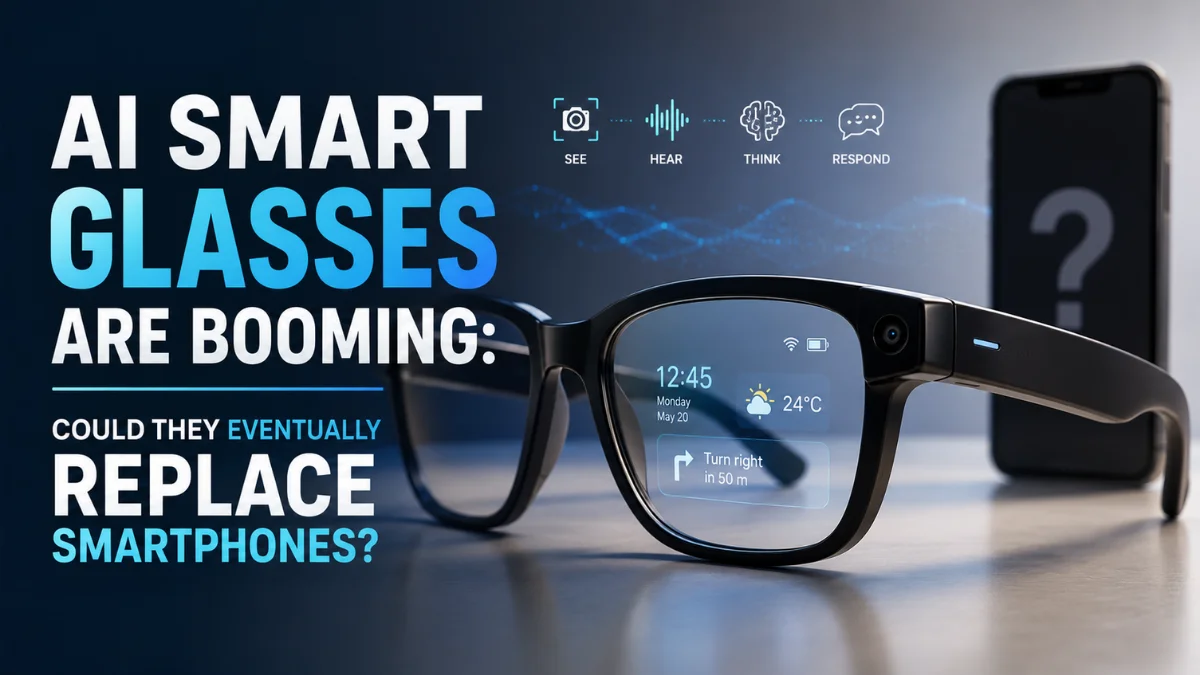
Apple Smart Glasses are reportedly being developed as lightweight wearable glasses with cameras, microphones, speakers, Siri and AI-assisted features.
According to the latest report, Apple may unveil the glasses at WWDC 2027 and begin shipping them later in the same year. Privacy is expected to play a central role in both the product design and Apple’s marketing strategy.
| Detail | Current Report |
|---|---|
| Expected announcement | WWDC 2027 |
| Possible release | Late 2027 |
| Cameras | Likely, but not confirmed |
| Photo and video recording | May be limited or unavailable |
| Audio features | Speakers and microphones |
| Assistant | Siri |
| Main selling point | Privacy |
| Officially confirmed | No |
What Are Apple Smart Glasses?
Apple Smart Glasses are expected to be a lightweight wearable device rather than a full mixed-reality headset.
The glasses could provide hands-free access to Siri, notifications, music, calls and AI-powered assistance. In addition, cameras may help the device understand objects and surroundings.
However, the first model may not provide the same immersive augmented-reality experience as Apple Vision Pro. Instead, it could work more like an intelligent iPhone companion that users can wear throughout the day.
That approach would place Apple in more direct competition with products such as Ray-Ban Meta smart glasses and other emerging AI wearables.
Could Apple Reveal Its Smart Glasses at WWDC 2027?
Apple reportedly plans to unveil its first smart glasses during WWDC 2027. The company may then begin shipping the product to customers in late 2027.
WWDC would be a logical place for the announcement because smart glasses would require more than new hardware. Developers may also need tools, frameworks and software guidance to build compatible experiences.
Apple traditionally uses WWDC to introduce major platform technologies and explain how developers can use them. For example, its conferences include software announcements, development frameworks, technical sessions and direct access to Apple engineers.
However, WWDC 2027 dates have not yet been officially announced. Moreover, Apple has not confirmed that smart glasses will appear at the event.
Why Privacy Could Be Apple’s Biggest Advantage
Smart glasses create a difficult privacy problem.
A phone normally needs to be lifted and pointed before it can record someone. Camera-equipped glasses, on the other hand, can capture information from the wearer’s viewpoint without the same obvious movement.
As a result, people nearby may not know when a camera is active or how their image is being processed.
Apple is reportedly testing several hardware and software privacy features that do not exist on its current products. The exact protections remain unknown, although Apple could use them to distinguish its glasses from rival devices.
This strategy would match Apple’s wider position on privacy. The company describes privacy as a fundamental human right and states that its products are designed to keep users in control of their data.
Nevertheless, Apple will need to protect two different groups:
- The person wearing the glasses
- The people standing around the wearer
Protecting only the owner’s data will not solve public concerns about hidden recording.
Will Apple Smart Glasses Have Cameras?
The most likely version of Apple Smart Glasses will reportedly include cameras. However, Apple has explored several possible designs.
According to the report, the company has considered glasses with cameras that support AI features but cannot take normal photos or record videos. Apple has also reportedly tested versions without cameras.
A camera could still be useful without traditional recording. For example, the glasses might use visual information to:
- Identify objects
- Read signs and text
- Provide navigation guidance
- Describe the surrounding environment
- Translate visible languages
- Answer questions about nearby places
- Support accessibility features
However, these capabilities have not been officially confirmed for Apple’s product.
The final version is currently expected to include cameras alongside Apple-style privacy protections. Still, users should treat all hardware details as unconfirmed until Apple makes an announcement.
Could Apple Prevent Secret Recording?
Apple may decide that the safest approach is to separate visual AI from normal camera recording.
For example, cameras could analyze the wearer’s surroundings without saving photos or videos. Moreover, visual requests could be processed locally whenever the device has enough computing power.
Apple might also introduce visible recording indicators, recognizable sounds, hardware restrictions, or stricter app permissions. However, the current report does not reveal which protections Apple is actually developing.
Therefore, these possible measures should be treated as analysis rather than confirmed features.
The challenge is significant. A small light can show that a camera is active, but people may not notice it. Similarly, a software notification protects the wearer without necessarily informing people nearby.
Apple will need a solution that is understandable from the outside, difficult to disable, and clear enough to build public trust.
How On-Device AI Could Protect User Data
Apple already uses on-device processing as a central part of its artificial-intelligence privacy strategy.
Apple says its devices process suitable Apple Intelligence requests locally. More complex requests can use Private Cloud Compute, which runs larger models while applying additional privacy protections. Apple also says that information sent to Private Cloud Compute is not stored and is used only to complete the request.
A similar model could make sense for Apple Smart Glasses.
Basic tasks such as recognising a familiar command, detecting a gesture or reading a short piece of text could potentially happen on the device. Meanwhile, more demanding requests might use an iPhone or Apple’s protected cloud infrastructure.
This approach could reduce the amount of personal visual and audio information sent to conventional cloud servers.
However, Apple has not confirmed how its smart glasses will process data. It has also not announced whether the product will support Apple Intelligence or Private Cloud Compute.
Expected Apple Smart Glasses Features
The current report points to several likely capabilities.
Siri Voice Controls
Apple Smart Glasses may use Siri for hands-free controls and spoken assistance. Users could potentially ask questions, manage notifications, start calls or control music without touching an iPhone.
A stronger Siri experience will be important because smart glasses have limited space for traditional buttons and touch controls.
For more on Apple’s assistant strategy, read Apple’s New Siri AI Could Be the Biggest iPhone Upgrade of 2026.
Speakers and Microphones
The glasses are expected to include speakers and microphones for phone calls, music, Siri and spoken notifications.
Open-ear speakers would allow users to hear audio without wearing separate earbuds. However, Apple would need to manage sound leakage and microphone privacy carefully.
Visual AI Assistance
If cameras are included, Apple could use them to provide contextual AI features. The system might answer questions about what the wearer sees or provide real-time assistance.
For example, a user could ask for information about a landmark, product, sign or object. Nevertheless, no specific visual AI functions have been officially announced.
iPhone Integration
The first Apple Smart Glasses may depend heavily on an iPhone for internet access, processing, setup and account management.
Using the iPhone could reduce the weight and power requirements of the glasses. In addition, it could allow Apple to use existing iPhone chips, connectivity and privacy controls.
Calls, Music and Notifications
The reported speakers and microphones could make the glasses useful for everyday communication. Users may be able to answer calls, hear message alerts and listen to music while keeping their phones in their pockets.
These practical features may matter more to early buyers than advanced augmented reality.
Apple Smart Glasses vs Apple Vision Pro
Although both devices belong to Apple’s wearable ecosystem, they are expected to serve very different purposes.
Vision Pro is a spatial computing headset designed for immersive apps, entertainment, and productivity. It combines digital content with the user’s physical surroundings while supporting eye, hand, and voice controls.
In comparison, Apple’s upcoming glasses could offer a lighter and more practical experience for everyday use. They may focus on Siri, calls, notifications, music and visual AI assistance rather than fully immersive mixed reality.
Therefore, the new wearable is unlikely to replace Vision Pro. Instead, Apple could position both products for different users and situations.
| Feature | Apple Smart Glasses | Apple Vision Pro |
|---|---|---|
| Device type | Lightweight smart eyewear | Spatial computing headset |
| Main purpose | Everyday AI assistance | Immersive computing |
| Expected controls | Siri and touch controls | Eyes, hands and voice |
| Portability | Likely suitable for daily wear | Less suitable for extended outdoor use |
| Current status | Rumoured | Officially available |
Apple Smart Glasses vs Ray-Ban Meta
Ray-Ban Meta glasses have helped demonstrate that users may accept smart eyewear when it looks similar to normal glasses.
Apple could follow a comparable form factor. However, privacy may become its main point of differentiation.
| Feature | Apple Smart Glasses | Ray-Ban Meta |
|---|---|---|
| Status | Rumoured | Available |
| Cameras | Likely | Yes |
| Speakers | Expected | Yes |
| Microphones | Expected | Yes |
| Voice assistant | Siri expected | Meta AI |
| Standard recording | May be restricted | Supported |
| Privacy strategy | Expected to be central | Includes recording indicator |
| Ecosystem | Apple and iPhone | Meta apps and services |
Apple may also benefit from its control over the iPhone, Apple silicon, Siri, Apple Intelligence and its wider ecosystem.
However, Meta already has experience with consumer smart glasses. Therefore, Apple will need to offer more than branding and privacy promises to convince buyers to switch.
You can also read Meta AI Smart Glasses: Four New Wearables Coming for a closer look at Meta’s wearable plans.
Could Apple Smart Glasses Use Apple Intelligence?
Apple Intelligence appears to be a natural fit for smart glasses, but support has not been confirmed.
Wearable AI could help users receive answers without looking at a phone. For instance, the glasses might summarize visible information, identify objects, translate text or provide reminders based on the user’s surroundings.
Apple could also combine Siri with personal context from the user’s iPhone. However, visual and audio information can be extremely sensitive. As a result, Apple would need strict controls over what the glasses collect, save, and share.
Its existing approach to on-device intelligence provides a possible foundation. Apple says on-device processing allows its intelligence features to use personal context without collecting that personal information centrally.
Even so, smart glasses data creates new challenges because cameras and microphones can capture information about other people.
Could Apple Smart Glasses Replace the iPhone?
Apple Smart Glasses are unlikely to replace the iPhone immediately.
A smartphone still offers a larger display, longer battery life, more powerful cameras and a better interface for apps, typing and entertainment.
Instead, the glasses could become an iPhone companion. They may handle quick interactions while the phone manages heavier processing and more complex tasks.
For example, users might use the glasses to:
- Hear notifications
- Ask Siri short questions
- Start phone calls
- Receive directions
- Identify nearby objects
- Translate signs
- Control music
Meanwhile, they would still use the iPhone for photography, messaging, apps, banking, gaming and video.
This relationship could be similar to the Apple Watch. The wearable handles convenient tasks, although the iPhone remains the primary device.
Why WWDC Is the Right Event for Apple’s Glasses
A WWDC introduction would allow Apple to explain the complete platform rather than showing only the hardware.
Developers may need access to:
- New smart-glasses frameworks
- Visual AI tools
- Siri integrations
- Privacy permissions
- Accessibility features
- Audio and notification controls
- App design guidelines
Apple introduced Vision Pro at WWDC 2023 and presented it as a new spatial-computing platform rather than simply another accessory.
Consequently, Apple could use a similar strategy for smart glasses. An early WWDC preview would give developers time to prepare apps before the reported late-2027 release.
What Apple Must Get Right
Apple’s first smart glasses will face several practical challenges.
Privacy That People Can Understand
Privacy protections must be visible and easy to explain. A long privacy policy will not reassure someone who believes they are being recorded.
Comfortable Everyday Design
The glasses must remain light enough for extended use. Heavy frames, visible electronics or poor weight distribution could limit adoption.
Useful Battery Life
Always-available cameras, microphones, AI and wireless connections require energy. Therefore, Apple will need efficient hardware and careful background processing.
A Clear Reason to Buy
Calls and music are already available through AirPods. Notifications are already available through Apple Watch. Visual search is already available on smartphones.
As a result, Apple must show why users need smart glasses in addition to their existing devices.
Trust From People Nearby
The owner of the glasses is not the only person affected. Apple must also consider bystanders, workplaces, schools, private homes and other sensitive locations.
That wider trust problem may be harder to solve than the technology itself.

Why Apple Smart Glasses Matter for the Wearable Market
Smart glasses could become the next major wearable category after smartwatches and wireless earbuds.
Recent products show that companies are shifting from large virtual-reality headsets toward lighter devices that combine cameras, audio and AI assistance.
Apple’s entry could accelerate that shift. Moreover, strong iPhone integration could introduce wearable AI to a much larger consumer audience.
The company’s privacy strategy could also influence competitors. If buyers respond positively to clearer recording controls and local AI processing, other manufacturers may need to provide similar protections.
For a broader view of this market, read AI Wearables 2026: Smart Glasses and Gadgets and Google Gemini AI Glasses: Android Wearables Next.
Should You Wait for Apple Smart Glasses?
Most users should not delay an immediate purchase based only on this report.
Apple has not officially confirmed the glasses, and a reported late-2027 release remains more than a year away. Furthermore, first-generation products can be expensive and may offer limited battery life or software support.
However, waiting may make sense if you already want smart glasses but have concerns about privacy or Apple ecosystem compatibility.
Potential buyers should watch for official information about:
- Price
- Battery life
- Camera recording
- Prescription lens support
- Apple Intelligence
- iPhone compatibility
- Regional availability
- Privacy indicators
- Repair options
Until Apple announces the product, these details remain unknown.
Final Thoughts
Apple Smart Glasses could give Apple a new way to compete in wearable AI. Nevertheless, the product’s success may depend less on adding cameras and more on making people comfortable with them.
The latest report suggests that Apple may unveil the glasses at WWDC 2027 before releasing them later that year. It also claims that privacy will become a major part of the device’s design and marketing.
That approach makes sense. Apple already promotes on-device intelligence, protected cloud processing, and privacy-focused hardware. However, glasses introduce a more complicated challenge because they can affect everyone standing near the wearer.
If Apple can combine useful AI, lightweight design, and understandable privacy protections, its smart glasses could become an important new part of the Apple ecosystem.
For now, however, the product remains unconfirmed.
Frequently Asked Questions
Has Apple officially confirmed its smart glasses?
No. Apple has not officially announced the product. Current details come from industry reports, so the company may change the design, features or launch timeline.
When could Apple announce its smart glasses?
The latest report says Apple may introduce the glasses at WWDC 2027. However, the company has not confirmed either the product or the announcement date.
When could Apple release its smart glasses?
Apple may begin shipping the glasses in late 2027. Nevertheless, development delays or strategy changes could move the release date.
Will Apple Smart Glasses include cameras?
The most likely design includes cameras. However, Apple has also tested camera-free versions and models that could use cameras for AI features without supporting standard photo or video recording.
Will Apple Smart Glasses support Apple Intelligence?
Apple has not confirmed Apple Intelligence support. Even so, Siri, visual assistance and on-device AI would fit the expected purpose of the glasses.
Will Apple Smart Glasses replace Vision Pro?
Probably not. Apple could use the glasses for lightweight daily assistance, while Vision Pro continues to provide immersive spatial-computing experiences.
Will Apple Smart Glasses replace the iPhone?
Not initially. The glasses will probably work alongside the iPhone for calls, notifications, Siri and visual assistance.
How could Apple protect user privacy?
Apple could process more information on the device, restrict recording, add clear camera indicators and apply stronger app permissions. However, the company has not revealed its final privacy system.