Meta AI Smart Glasses Roadmap: Four New Wearables Could Launch Soon
 By Inflix
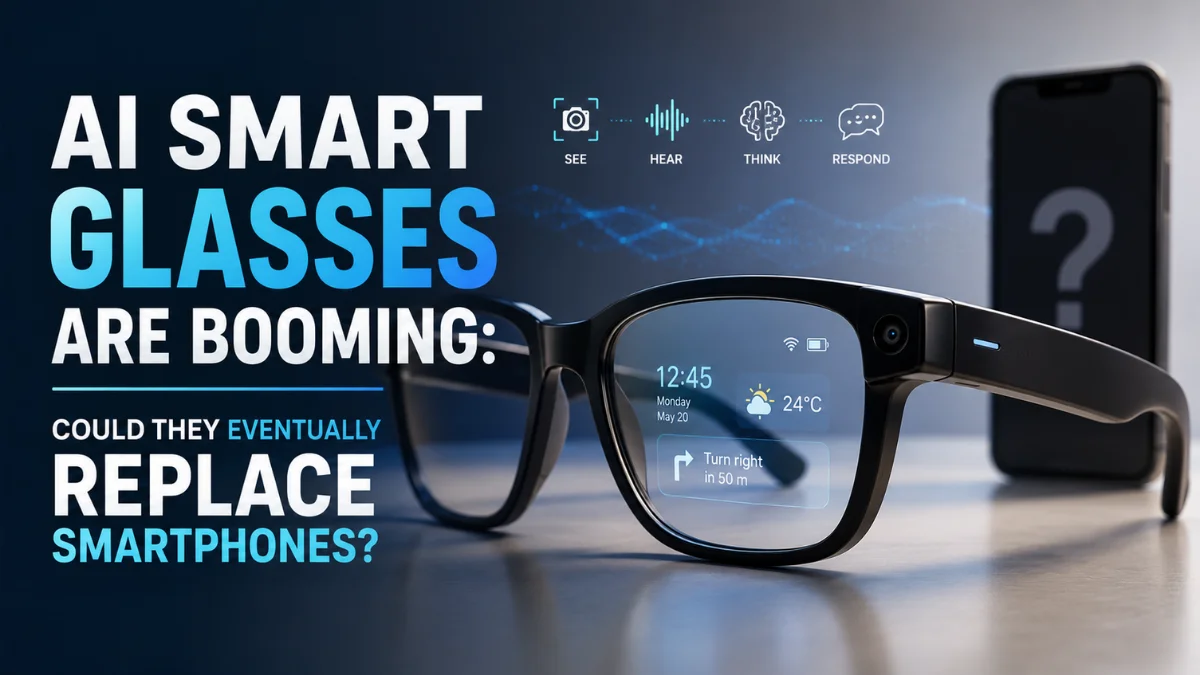
 Meta AI smart glasses could become one of the biggest wearable tech stories of 2026. After the success of Ray-Ban Meta glasses, Meta now appears ready to expand its AI hardware plans with more smart glasses, workplace wearables and even an AI-powered pendant.
This matters because wearable AI is becoming a serious new battleground. Phones are still important, but companies now want AI assistants to move closer to users through glasses, pendants, earbuds and other everyday devices.
For Mobile Verse readers, Meta’s roadmap is important because it shows how AI wearables may become more practical, more visual and more useful in daily life.
What Are Meta AI Smart Glasses?
Meta AI smart glasses are wearable devices that combine normal glasses-style design with cameras, microphones, speakers and AI features. The most popular example is Ray-Ban Meta glasses, which let users capture photos, record videos, listen to audio, make calls and interact with Meta AI.
Unlike bulky VR headsets, these glasses are designed for everyday use. They look closer to normal eyewear, which makes them easier to wear in public.
The bigger idea is simple: instead of taking out a phone for every task, users can ask their glasses for help, capture what they see or get information through voice.
Why Meta AI Smart Glasses Matter in 2026
Meta AI smart glasses matter because they show where wearable technology may go next. Smartwatches already handle notifications and health tracking, but glasses can understand the world from the user’s point of view.
That makes them powerful for visual AI. If the glasses can see what the user sees, they can answer questions about objects, signs, products, places and documents.
This could make AI feel more natural than a phone app. Instead of typing or uploading an image, users could simply look at something and ask a question.
Meta’s Smart Glasses Roadmap Explained
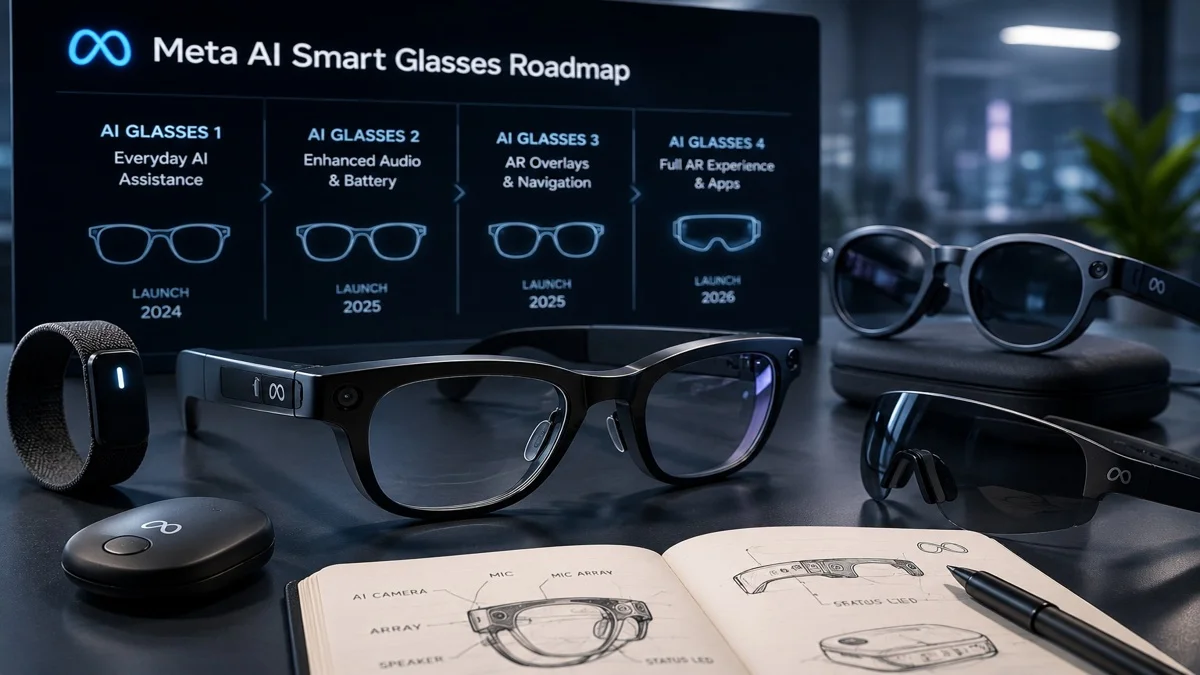
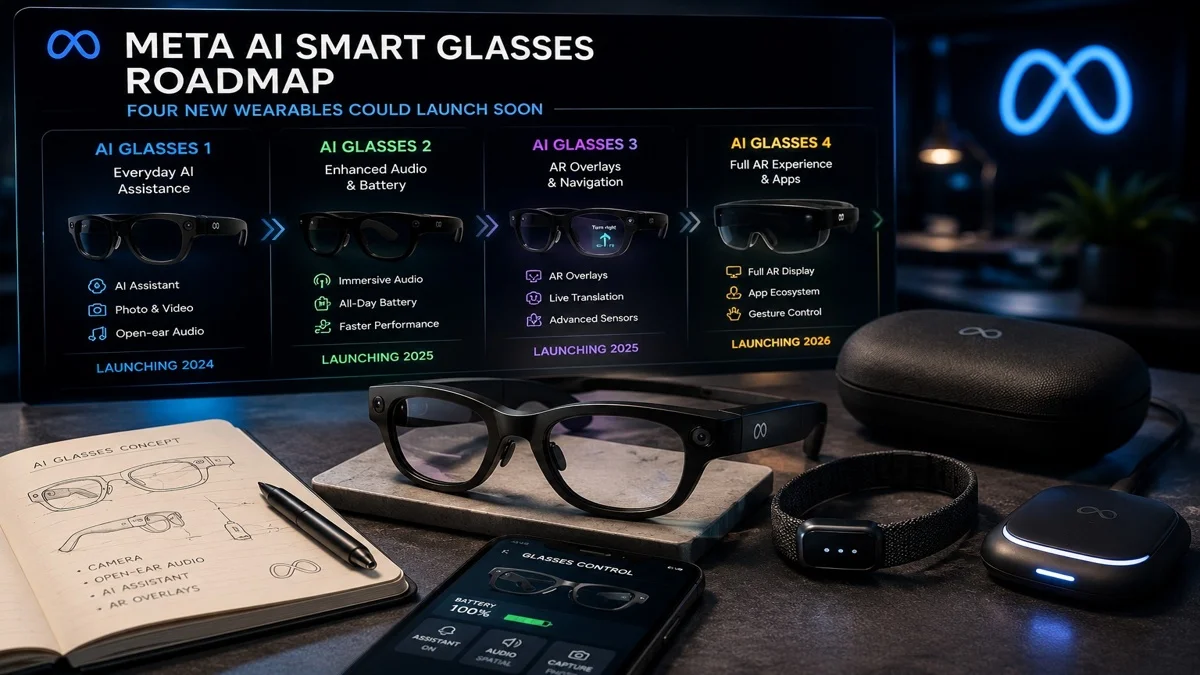
Reports suggest Meta is preparing a broader smart glasses roadmap with multiple models. This could include consumer glasses, workplace-focused devices and more advanced premium versions.
The main goal appears to be building an AI wearable ecosystem. Meta does not want smart glasses to be only a camera accessory. Instead, it wants them to become an always-available assistant for communication, search, productivity and daily tasks.
This is important because Meta is competing with Google, Apple, OpenAI and other companies that are also exploring AI hardware.
Four New Meta Wearables Could Be Coming
The most interesting part of the report is the claim that Meta may be working on several new wearable devices. Some reports describe four smart glasses models, while others also mention an AI-powered pendant.
That suggests Meta may not rely on one device type. Instead, the company could test different shapes for different users.
For example, some people may prefer normal-looking glasses. Others may want a workplace wearable, a camera-free device or a pendant-style assistant. This variety could help Meta reach more users.
AI Pendant Could Expand Meta’s Wearable Plans
Meta is also reportedly developing an AI pendant. TechCrunch reports that the device could build on Meta’s acquisition of Limitless, a startup known for clip-on AI devices that record and transcribe conversations. The pendant is reportedly planned for testing next year.
This kind of device could be useful for meetings, notes, reminders and conversation summaries. Unlike smart glasses, a pendant may not need to be worn on the face, which could make it easier for some users.
However, an audio-focused wearable also raises privacy questions. Users will want clear controls over recording, storage and consent.
Wearables for Work Could Target Businesses
Meta’s wearable plans may also include business use cases. TechRepublic reports that Meta is planning AI pendant and smart glasses tools as part of a “Wearables for Work” expansion.
This could include workplace subscriptions, team tools and AI features for meetings, customer support, retail or field work. Businesses may use smart glasses or pendants to capture notes, guide workers or provide hands-free information.
This makes sense because enterprise users may have clearer reasons to adopt AI wearables than casual consumers. If the device saves time at work, companies may be more willing to pay for it.
Ray-Ban Meta Glasses Built the Foundation
Ray-Ban Meta glasses helped prove that smart glasses can look stylish and useful. They are not perfect, but they showed that people may accept glasses with cameras and AI if the design feels normal enough.
That is a big advantage for Meta. Many earlier smart glasses failed because they looked awkward or felt too futuristic. Ray-Ban Meta made the category feel more mainstream.
Now, Meta can build on that foundation with more models, smarter AI and possibly better workplace tools.
How Meta AI Could Make Glasses Smarter
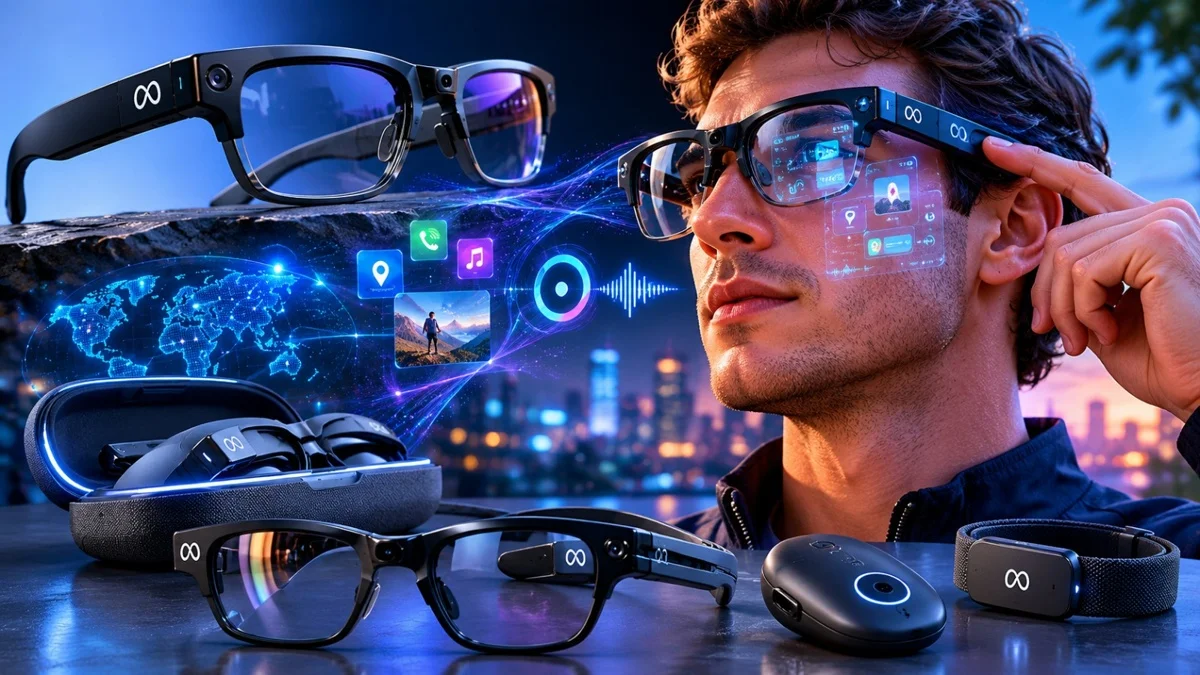
Meta AI could make smart glasses much more useful by turning them into visual assistants. A user might ask the glasses to identify a landmark, translate a sign, remember a detail or explain something in front of them.
This is where glasses have an advantage over phones. A phone sees only what you point its camera at. Glasses can see from your point of view.
If Meta improves context awareness, the glasses may feel less like a camera and more like a personal AI assistant.
Smart Glasses vs AI Pendants
Smart glasses and AI pendants solve different problems. Glasses are better for visual AI because they can see what the user sees. Pendants may be better for voice, conversation notes and hands-free audio tasks.
A pendant could be more discreet in some settings, but it may not offer the same visual understanding. Glasses are more powerful for real-world search, but they may raise stronger privacy concerns because of built-in cameras.
Meta may be exploring both because no one knows the perfect form for wearable AI yet.
Meta AI Smart Glasses and Privacy Concerns
Privacy will be one of the biggest challenges for Meta AI smart glasses. Wearable devices can include cameras, microphones, sensors and always-ready AI features.
Users will want to know when recording happens, how data is stored and whether people nearby are clearly informed. This is especially important for glasses because they can capture the world from the wearer’s point of view.
Meta will need strong privacy controls, clear indicators and simple settings if it wants people to trust these devices.
Why AI Wearables Are Getting Popular
AI wearables are getting attention because phones are not always the best way to use AI. Pulling out a phone, opening an app and typing a question can feel slow.
A wearable assistant can be faster. It can listen, respond, capture information and provide help without interrupting the user as much.
This is why companies are exploring glasses, pendants, earbuds and badges. They want AI to become part of the user’s environment, not just another app.
Meta vs Google in AI Glasses
Meta is not alone in this market. Google is also exploring AI-powered glasses and Android-based wearable experiences. The competition is likely to grow as AI becomes more visual and context-aware.
Meta already has an advantage with Ray-Ban Meta glasses and social-media integration. Google has strength in search, Android and Gemini. Apple may also enter the space later with its own wearable strategy.
This means AI smart glasses could become a major tech battle over the next few years.
How This Connects With AI Gadgets
Meta’s wearable roadmap connects with the wider AI gadget trend. Microsoft is exploring agent-first devices with Project Solara, while OpenAI-backed startups are looking at new AI hardware formats.
You can read our Mobile Verse guide on Microsoft Project Solara to see how AI agent devices could move beyond traditional apps.
This shows that AI hardware is not only about one company. Many tech firms are searching for the next device category after smartphones.
Meta AI Smart Glasses vs Cyberdecks
Interestingly, Meta AI smart glasses and cyberdecks show two opposite sides of future tech. Smart glasses focus on AI automation, voice help and wearable convenience. Cyberdecks focus on manual control, custom hardware and personal computing freedom.
Both trends are important because users are questioning normal phones and laptops. Some want AI to make life easier. Others want devices they can build, repair and fully control.
You can also read our Mobile Verse article on cyberdecks to understand the DIY side of future computing.
Could Meta AI Smart Glasses Replace Phones?
Meta AI smart glasses are unlikely to replace smartphones soon. Phones still offer bigger screens, powerful apps, keyboards, cameras and full internet access.
However, smart glasses could reduce how often users need to pick up their phones. They may handle quick questions, calls, photos, translations and reminders.
That makes them more like companion devices than full phone replacements. Over time, they could become more important as AI features improve.
What Meta Needs to Get Right
Meta must solve several challenges if it wants smart glasses to go mainstream. First, the glasses need to look normal and feel comfortable. Secondly, battery life must be strong enough for daily use.
The AI also needs to be genuinely useful. If users only try it once and then forget about it, the product will not grow. Privacy controls must also be clear because people are sensitive about wearable cameras and microphones.
Price will matter too. AI glasses must feel useful enough to justify the cost.
For readers interested in future smart devices, wearables, and mobile accessories, Zextons Tech Store is a useful place to explore phones, gadgets, and tech products in the UK. As AI wearables grow, reliable tech retailers will become more important for users comparing new devices and accessories.
Why This News Matters for Mobile Verse Readers
This news matters because AI wearables could become the next major tech category after smartphones and smartwatches. Meta already has a real product foundation through Ray-Ban Meta, and its reported roadmap suggests bigger plans ahead.
For Mobile Verse readers, this is not only about one pair of glasses. It is about how AI assistants may move from phone screens into everyday objects.
That shift could change how people search, communicate, shop, work and capture memories.
Final Thoughts
Meta AI smart glasses could become a major part of the future wearable market. Reports of new glasses models, an AI pendant and workplace tools show that Meta is taking AI hardware seriously.
The opportunity is huge, but the challenges are real. Meta must balance useful AI features with privacy, comfort, battery life and trust.
Overall, Meta’s roadmap is worth watching because it shows where wearable AI may go next. Phones are not going away, but smart glasses and AI pendants could become the next important layer of personal technology.
FAQs
What are Meta AI smart glasses?
Meta AI smart glasses are wearable devices that combine glasses-style design with cameras, microphones, speakers and AI assistant features.
Is Meta making new smart glasses?
Reports suggest Meta is working on multiple new smart glasses models as part of a wider AI wearable roadmap.
What is Meta’s AI pendant?
Meta’s AI pendant is a reported wearable device that could record, transcribe and organise conversations using AI-powered tools.
Can Meta AI smart glasses replace phones?
Not yet. They may work as companion devices for quick questions, photos, calls and AI assistance, but phones remain more powerful.
Why are AI smart glasses important?
AI smart glasses are important because they can offer hands-free, visual and context-aware assistance in daily life.