Qualcomm CEO Says AI Will Replace Mobile Apps: Is Your Smartphone About to Change Forever?
 By Inflix
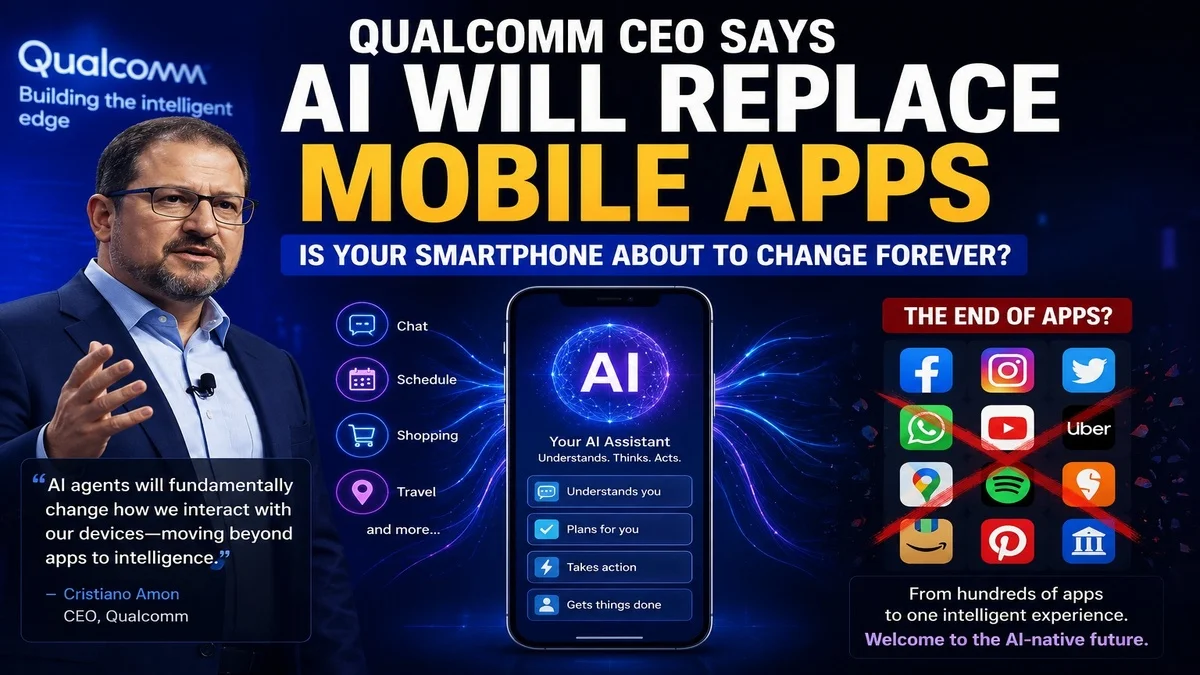
 Smartphones may be entering their biggest change since the launch of the app store. Qualcomm CEO Cristiano Amon has suggested that AI will replace mobile apps as the main way people use their phones. That does not mean apps will disappear overnight. However, it does mean the way we open apps, search for features, switch between services and complete daily tasks could change completely.
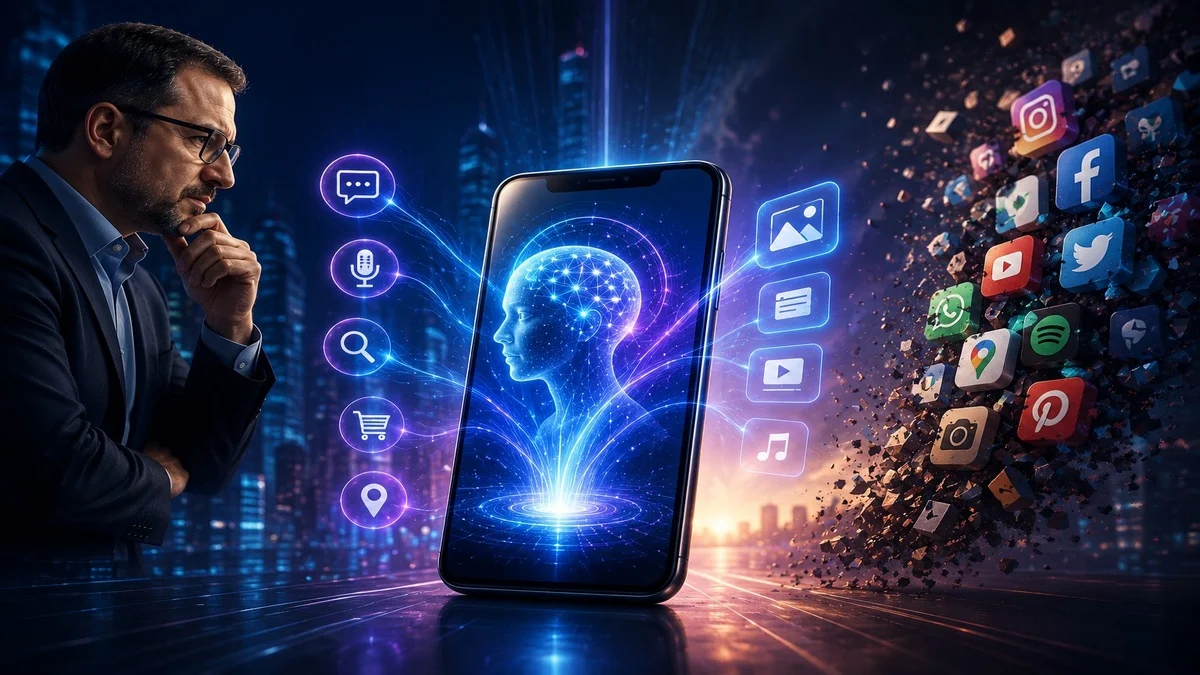
According to Qualcomm’s latest AI vision, the future phone may not depend on hundreds of separate app icons. Instead, AI agents could understand what users want and complete tasks across different services. For example, you may not need to open a banking app, travel app, calendar app or shopping app one by one. Your AI agent could handle the steps for you.
This is why the statement is getting attention. Qualcomm is not just talking about a small software update. The company is describing a major shift from app-first smartphones to AI agent-first smartphones. Qualcomm’s official Project Solara post also explains a future where AI agents, not apps, become the primary interface across devices.
AI Will Replace Mobile Apps Because Smartphones Are Changing
The current smartphone experience is built around apps. You open WhatsApp for messages, Gmail for email, banking apps for payments, Google Maps for travel and shopping apps for orders. However, this model can feel slow when users need to jump between several apps for one simple task.
Qualcomm’s idea is different. Instead of making users manage every app manually, an AI agent could understand the goal and take action. Therefore, the phone becomes less about “which app should I open?” and more about “what do I want to get done?”
Reports from Qualcomm’s Computex 2026 keynote say Cristiano Amon described 2026 as the “year of agents,” with AI systems moving beyond simple answers and becoming tools that can plan, reason and take action for users.
This could be a huge moment for smartphone AI. Until now, most phone AI features have focused on photo editing, writing tools, translation, voice assistants and search. However, AI agents could go further because they may control multiple actions across apps and services.
AI Agents on Smartphones Could Replace Mobile Apps
AI agents are smarter digital assistants that can complete tasks with less manual input. A normal assistant may answer a question. However, an AI agent can understand a request, plan the steps and take action.
For example, you could ask:
“Find me the cheapest train to London tomorrow, check my calendar, and remind me before I leave.”
A normal assistant may show search results. However, an AI agent could check your schedule, compare routes, suggest the best time and create a reminder. In the future, it may even book the ticket if you give permission.
That is why the keyword AI will replace mobile apps is becoming important. The real change is not that apps vanish. Instead, apps may become background services while AI becomes the main user interface.
Will AI Replace Mobile Apps Completely?
No, mobile apps will not disappear immediately. Apps still hold user accounts, payments, content, settings and services. However, their role could become less visible.
Today, users open apps directly. Tomorrow, AI may open, control or connect those apps in the background. As a result, the app icon may become less important than the AI agent sitting on top of the phone.
This is similar to how search engines changed websites. Websites did not disappear. However, users often found information through Google instead of typing website addresses directly. In the same way, AI agents may become the new starting point for smartphone tasks.
Qualcomm has also said on-device agentic AI can create more personalised technology that understands context and adapts to user needs. This matters because the future of AI phones will depend heavily on privacy, speed and local processing.
How AI Will Replace Mobile Apps in Daily Phone Use
If AI agents become the new app layer, daily phone use could become much faster. Users may spend less time searching through menus and more time getting results.
For example, instead of opening four different apps to plan a trip, you could ask your phone to plan everything. The AI could check the weather, compare travel options, find hotel details, update your calendar and create a packing reminder.
In addition, shopping could become easier. You may ask your phone to find the best price for a product, check trusted stores and compare delivery dates. Meanwhile, your AI agent could remember your size, budget and brand preferences.
Communication may also change. Instead of opening separate apps for email, text and social messages, users could ask the AI to summarise important messages and draft replies. Therefore, phones may become more proactive and less app-heavy.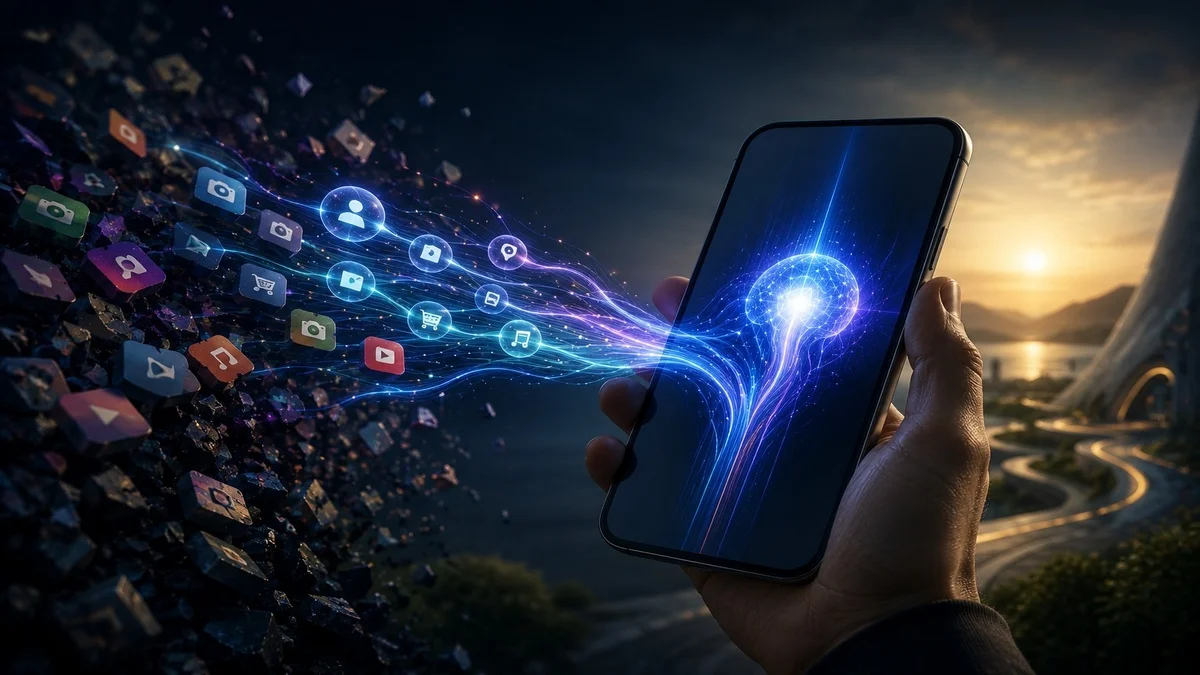
AI Will Replace Mobile Apps on Android and iPhone
This shift could affect both Android and iPhone users. Android phone makers already compete heavily on AI features, especially Samsung, Google, Honor, Xiaomi and Oppo. On the other hand, Apple is also building deeper Apple Intelligence features into iPhone, iPad and Mac.
Qualcomm’s role is important because its Snapdragon chips power many Android phones. If Qualcomm builds stronger on-device AI into future chips, Android brands may launch phones where AI agents become a core selling point.
For iPhone users, the same trend still matters. Apple controls both hardware and software, so it could build a more private AI agent experience inside iOS. However, Apple will need to show that Siri and Apple Intelligence can compete with faster AI agent systems from Google, Samsung, Qualcomm partners and other tech companies.
AI Agents Could Make Phones More Personal
One major reason Qualcomm is pushing this idea is personal context. Your phone already knows a lot about your habits, location patterns, messages, photos, calendar and apps. If AI can process that information safely, it can become much more useful.
For example, your phone could understand that you normally leave for work at 8:30 AM, prefer silent mode during meetings and usually order groceries on Friday. As a result, your AI agent could suggest useful actions before you even ask.
However, this also creates a big privacy question. AI agents need access to personal information to become truly helpful. Therefore, phone makers will need to prove that user data is protected, permissions are clear and private tasks can run safely on the device.
This is where on-device AI becomes a high-value keyword. If more AI processing happens directly on the phone, users may get faster responses with better privacy compared with sending everything to the cloud.
Privacy Risks When AI Replaces Mobile Apps
The idea sounds exciting, but it also creates risks. If an AI agent can access banking, shopping, messages, location and personal files, users need strong control.
A bad AI agent could make mistakes. It could misunderstand a request, choose the wrong option or share sensitive information with the wrong app. Therefore, smartphone companies must build clear permission systems.
Users should be able to decide which apps the AI can access. In addition, they should see what the AI is doing before it completes sensitive actions like sending money, deleting files or making purchases.
This is one reason apps may not fully disappear. Apps provide boundaries, permissions and trusted interfaces. AI agents may sit above them, but the app system will still be needed for safety, security and user control.
Why Qualcomm’s AI Agent Push Is Bigger Than Phones
Qualcomm is not only thinking about smartphones. The company is also looking at smart glasses, wearables, PCs, cars and connected devices. Qualcomm’s Computex 2026 press kit highlights “The Year of Agents” and shows how the company wants agentic AI to work across the wider computing world.
This means your phone may not remain the only centre of your digital life. In the future, AI could move between your phone, earbuds, smartwatch, smart glasses, laptop and car.
For example, you could ask a question through smart glasses, continue the task on your phone and finish it on your laptop. The AI agent would remember the context across devices. Therefore, the future may be less about one smartphone screen and more about connected AI experiences.
For more background, Qualcomm has explained its wider move toward agent-first computing, while its Computex 2026 page highlights the company’s focus on the year of AI agents. You can also read more Mobile Verse coverage on latest smartphone updates and AI phone features.
Could AI Agents Replace App Stores?
AI agents may also change app stores. Today, users search for apps, download them and learn how each one works. In the future, users may simply ask the AI for a result.
For example, instead of downloading a new travel app, a user might ask the AI to find the best flight deal. The AI could use trusted services in the background. Therefore, app discovery may become less important, while service quality and AI compatibility become more important.
However, app stores will still matter for security, payments, subscriptions and developer distribution. Apple and Google are unlikely to let the app store model disappear quickly because it is a major part of the mobile economy.
Still, developers may need to adapt. Future apps may need to work better with AI agents, voice commands and background actions.
What AI Replacing Mobile Apps Means for Developers
If AI will replace mobile apps as the main interface, developers must rethink how apps are built. The best apps may not be the ones with the prettiest menus. Instead, they may be the apps that allow AI agents to complete tasks quickly and safely.
Developers may need to create better APIs, clearer permissions and AI-friendly workflows. For example, a food delivery app may need to let AI agents compare menus, check delivery times and place orders with user approval.
In addition, content inside apps may need to become easier for AI systems to understand. This could affect everything from shopping apps to finance apps, travel apps and productivity tools.
Will Users Like AI Agent Phones?
Many users will like the convenience. Phones are powerful, but they can also feel crowded. Too many notifications, too many apps and too many settings make the experience tiring.
AI agents could reduce that friction. Instead of tapping through several screens, users could simply ask for what they need.
However, some users may not trust AI with personal tasks. Others may prefer opening apps manually because it gives them more control. Therefore, the best future phones will likely offer both options: traditional apps for control and AI agents for speed.
The Future Smartphone May Look Very Different
The smartphone home screen has not changed much in years. We still use icons, widgets, notifications and app folders. However, AI agents could finally change that.
Future phones may show fewer icons and more intelligent suggestions. Your phone may surface tasks based on time, location and habit. For example, it could show your boarding pass at the airport, your workout plan at the gym or your shopping list near the supermarket.
This would make smartphones more context-aware. However, it also means phone makers need to avoid making the experience annoying or intrusive. AI should help users, not overwhelm them.
Replace Mobile Apps Slowly, Not Overnight
Yes, but not overnight. The change will likely happen slowly over the next few years. First, we will see more AI summaries, smarter assistants and better on-device features. Then, AI agents will start completing small tasks across apps. After that, phones may become more agent-first than app-first.
Qualcomm’s message is clear: the next big smartphone battle may not be about camera megapixels or charging speed only. It may be about which phone has the smartest, fastest and most trusted AI agent.
For users, this could make phones easier and more helpful. However, it also brings serious questions about privacy, control and trust.
Final Thoughts
Qualcomm CEO Cristiano Amon’s idea that AI will replace mobile apps is not just a bold headline. It reflects a wider shift happening across the tech industry. Smartphones are moving from simple app launchers to intelligent devices that understand context and complete tasks.
Apps will not vanish tomorrow. However, their role may change. Instead of being the main thing users open, apps may become services that AI agents use in the background.
Overall, the future smartphone could be faster, smarter and more personal. But for this future to work, companies must protect privacy, give users control and make AI agents reliable enough for daily life.
For Mobile Verse readers, this is one trend worth watching closely because it could shape the next generation of Android phones, iPhones, wearables and AI-powered devices.
FAQs
Will AI replace mobile apps completely?
AI may not replace mobile apps completely, but it could reduce how often users open apps manually. Instead, AI agents may handle tasks across apps in the background.
What does Qualcomm mean by AI agents?
Qualcomm is talking about smarter AI systems that can understand user requests, plan steps and complete actions across phones, PCs, wearables and other connected devices.
Will Android phones get AI agents first?
Many Android brands use Qualcomm Snapdragon chips, so Android phones may adopt advanced AI agent features quickly. However, Apple is also building deeper AI tools for iPhone.
Are AI agents safe for banking and shopping?
AI agents can be useful for banking and shopping, but they need strong permissions, user approval and privacy controls before handling sensitive tasks.
Should I stop downloading mobile apps?
No. Mobile apps are still important. AI agents may change how you use apps, but apps will remain useful for accounts, payments, services and security.