AI Phones 2026: How Smartphones Are Becoming Personal Assistants
 By Inflix
 AI phones 2026 are changing what users expect from smartphones. In the past, phones were mainly tools for calls, apps, photos and browsing. Now, they are becoming smarter personal assistants that can search visually, protect users from scams, improve photos, translate content and understand context.
This shift is important because AI is no longer limited to a separate chatbot app. Instead, it is moving directly into the phone experience. Google, Samsung and Apple are all building AI features into the devices people use every day.
For Mobile Verse readers, this trend matters because the next smartphone upgrade may not only be about a better camera or faster chip. It may be about how helpful the phone becomes in real life.
What Are AI Phones 2026?
AI phones 2026 are smartphones that use artificial intelligence to make daily tasks easier, faster and more personal. These devices can understand voice commands, analyse images, summarise content, improve photos, warn users about scams and help with search.
The key difference is that AI is becoming built into the phone system. Instead of opening a separate app for every task, users may get help directly inside calls, messages, photos, search, camera and settings.
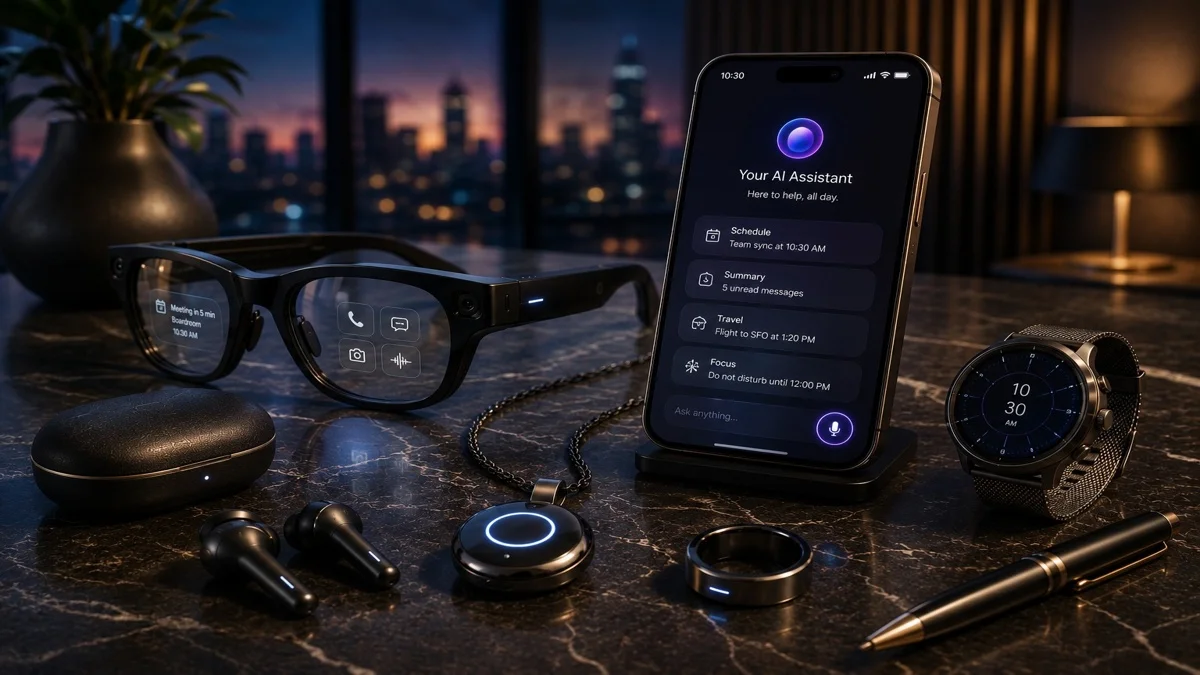
This makes the phone feel more like a personal assistant. It can help users do things with fewer steps and better context.
Why AI Phones 2026 Matter
AI phones 2026 matter because smartphones are still the most important personal devices for most people. Even as AI glasses, pendants and audio gadgets grow, the phone remains the main hub.
That means the biggest AI shift may happen inside smartphones first. Users already carry them, trust them and use them for everything from banking to travel.
For official context, Google has shared more about its latest Android security and privacy protections, including AI-powered safeguards designed to protect users from scams, fraud and suspicious mobile threats.
Smartphones Are Becoming Personal Assistants
The biggest change is that smartphones are becoming proactive. Older phones waited for users to open apps and complete tasks manually. New AI phones can suggest actions, surface information and help users at the right moment.
For example, a phone may warn about a scam call, identify an object on screen, summarise a message, improve a photo or translate text.
This does not mean phones will think like humans. However, they are becoming better at understanding what users need and reducing extra steps.
Google Gemini Is Driving Android AI
Google Gemini is one of the biggest forces behind AI phones in 2026. Gemini is becoming part of Android, search, visual assistance and phone experiences.
On Android, Gemini can support visual search, smarter answers, writing help and contextual support. Combined with features like Circle to Search, it makes the phone more useful without forcing users to switch apps.
You can read our Mobile Verse guide on the Circle to Search update to see how Google is making Android visual search smarter.
Galaxy AI Is Making Samsung Phones Smarter
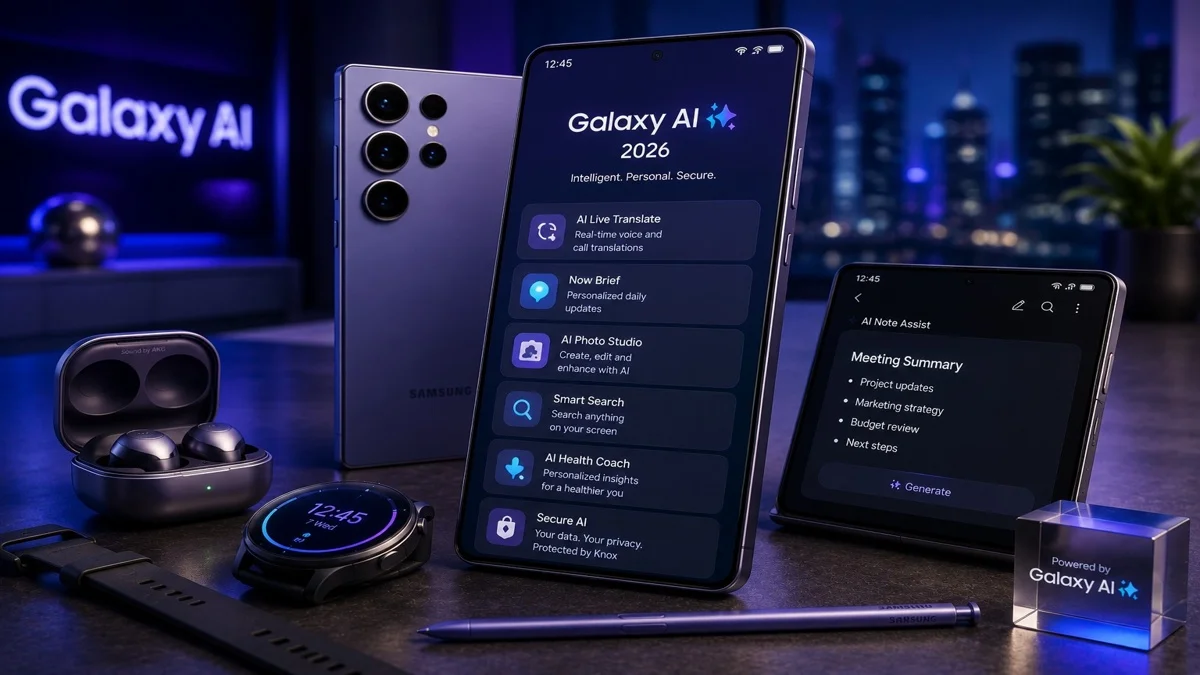
Samsung is also pushing hard with Galaxy AI. New Galaxy phones are designed around smarter search, writing tools, camera improvements and productivity features.
Samsung’s Galaxy AI direction shows how phone makers are trying to make AI feel practical. Users do not only want flashy demos. They want tools that help with messages, photos, translation, calls and everyday tasks.
Samsung’s strength is that it can combine Google AI tools with its own phone features. As a result, Galaxy phones may become some of the most complete AI phones for Android users.
On-Device AI Is Becoming More Important
On-device AI is one of the most important parts of the AI phone future. It means some AI tasks happen directly on the phone instead of relying fully on cloud servers.
This can improve speed and privacy. For example, a phone may process certain voice, image or text tasks locally, which can reduce delay and limit data sharing.
However, not every AI task can happen on-device. More complex requests may still need cloud processing. The best AI phones will likely combine both approaches.
AI Phones 2026 and Visual Search
Visual search is one of the most useful AI phone features. Instead of typing a query, users can search by selecting something on their screen or camera.
Circle to Search is a strong example. Users can circle, tap or highlight something on screen and get results instantly. This is useful for products, outfits, landmarks, words, images and diagrams.
Visual search makes phones feel more natural because users can search what they see, not just what they can describe.
AI Phones 2026 and Scam Protection
AI scam protection is becoming a major smartphone feature. Scammers now use spoofed numbers, fake messages, deepfake voices and urgent emotional tricks.
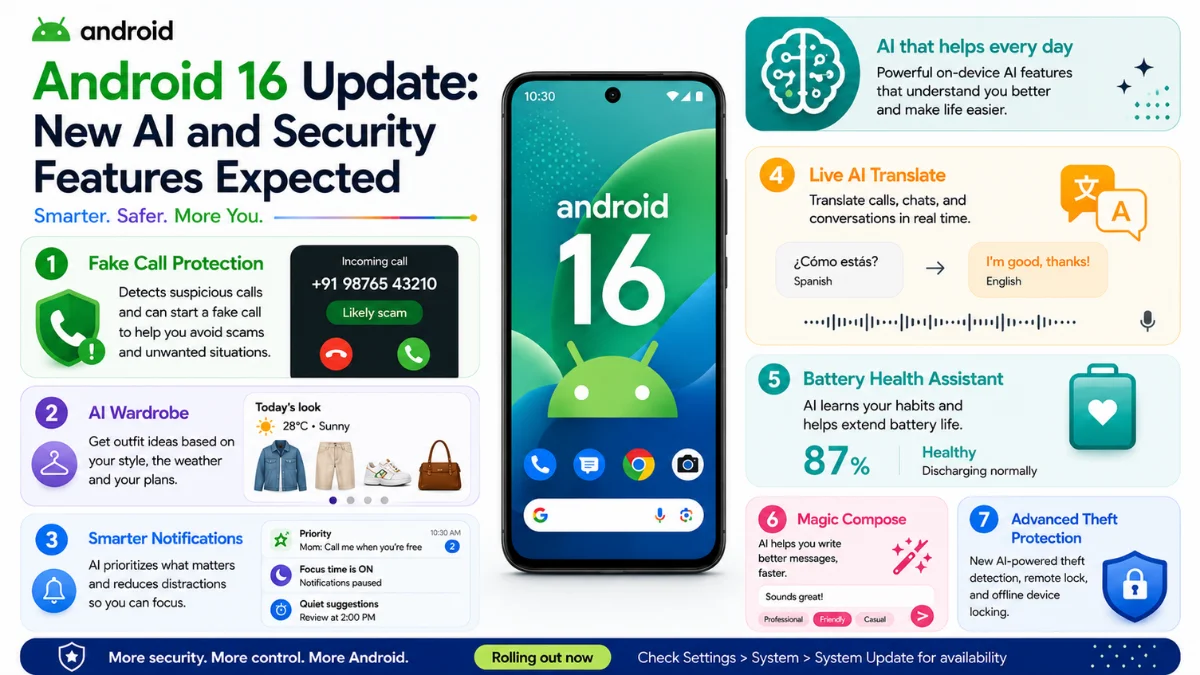
Google’s Phone app is rolling out fake call detection that warns users when a caller may be impersonating a saved contact. Reports say the feature uses encrypted RCS-based verification and starts on Pixel devices running Android 12 or newer.
You can read our Mobile Verse guide on Android AI scam protection to see how AI is making mobile security smarter.
I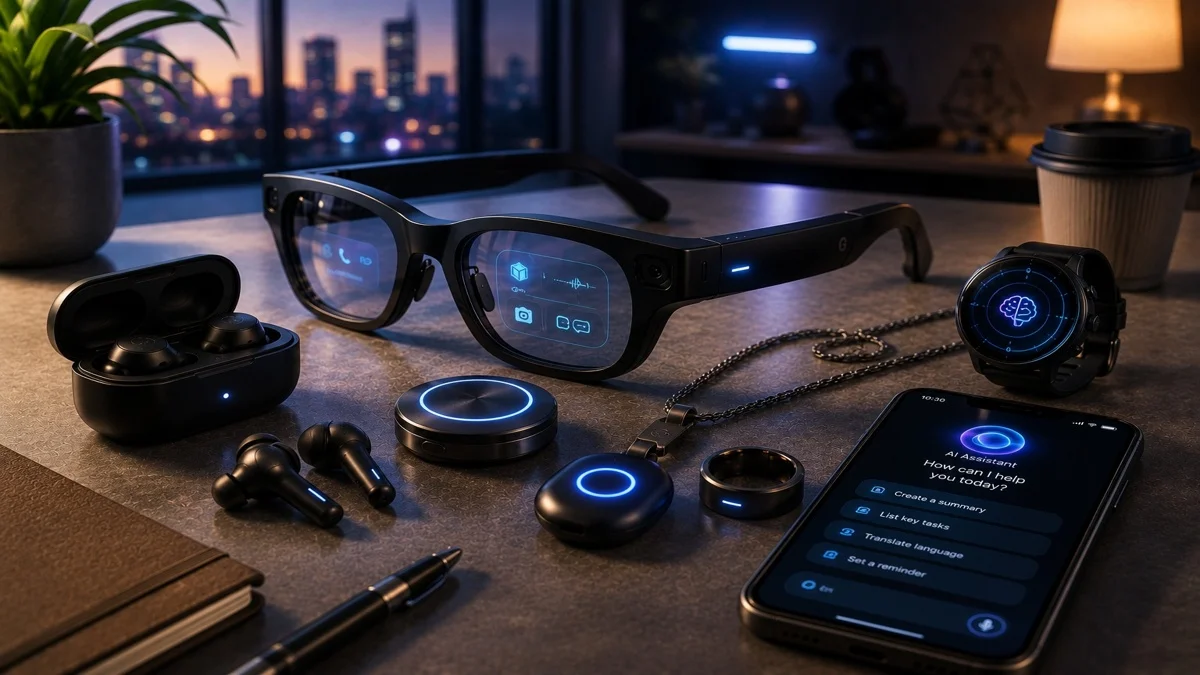
AI Camera Tools Are Getting Better
AI camera tools are now one of the biggest selling points for new phones. Smartphones already use AI for scene detection, portrait effects, night mode, zoom and image cleanup.
In 2026, AI camera tools are becoming more helpful. Phones can guide users while taking pictures, improve group shots, remove distractions and enhance details automatically.
This matters because most users want better photos without learning manual camera settings. AI makes that easier.
AI Phones and Real-Time Translation
Real-time translation is another major AI phone feature. It can help users translate calls, messages, signs, menus and conversations.
This is useful for travel, business, education and daily communication. Instead of opening a separate translation app, users may get translation directly inside the phone experience.
As Gemini, Galaxy AI and Apple Intelligence improve, real-time translation could become one of the most practical AI tools.
AI Phones and Productivity
AI phones can also improve productivity. Users may get summaries of long messages, meeting notes, reminders, email help and smarter calendar suggestions.
This is where smartphones can become true personal assistants. Instead of only showing notifications, the phone can help organise information and reduce mental load.
For example, a phone may summarise missed notifications, suggest replies or help users find important details quickly.
AI Phones vs AI Gadgets
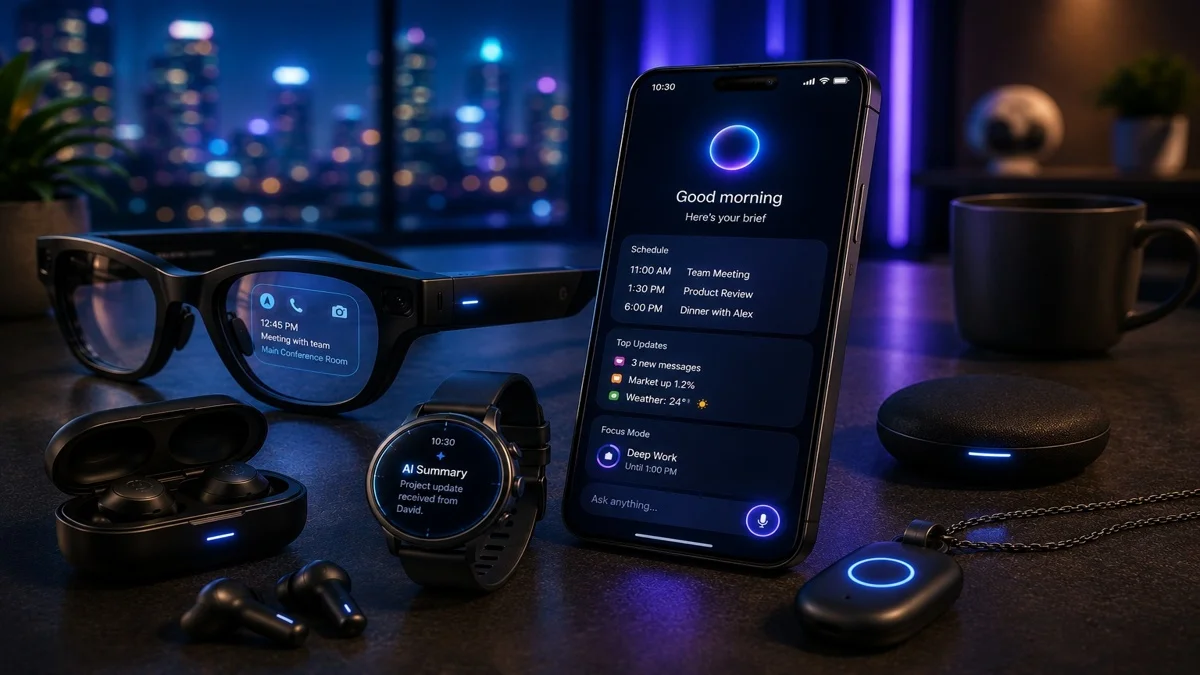
AI phones and AI gadgets are growing at the same time. Smart glasses, pendants and audio gadgets are trying to make AI more hands-free, while phones are becoming more intelligent from the inside.
However, smartphones still have the biggest advantage. They already have screens, cameras, apps, mobile networks and user trust.
You can read our post on AI gadgets vs smartphones to see whether future devices could replace phones or simply work beside them.
AI Phones vs AI Wearables
AI wearables may help with quick tasks, but AI phones remain more flexible. A smart glasses device may be great for visual search. An AI pendant may help with voice notes. However, the phone can do almost everything in one device.
This is why AI wearables may become companions rather than replacements. They will likely depend on phones for setup, apps, accounts and internet access.
You can read our Mobile Verse pillar post on AI wearables 2026 to see how smart glasses, pendants and audio gadgets fit into this future.
Privacy Questions Around AI Phones
Privacy is one of the biggest concerns with AI phones. These devices may process messages, calls, photos, voice commands, locations and personal habits.
Companies must be clear about what happens on-device and what goes to the cloud. Users should also review permissions and privacy settings before enabling new AI tools.
AI phones can be helpful, but trust will decide whether users fully accept them.
Battery Life and AI Performance
AI features can use more processing power, so battery life matters. A phone may have excellent AI tools, but users will not like them if they drain the battery too quickly.
That is why chipsets with stronger neural processing units are becoming important. Better AI chips can help phones run smart features faster and more efficiently.
In 2026, AI performance may become as important as camera quality for flagship phones.
Which Brands Are Leading AI Phones?
Google, Samsung and Apple are the main names to watch. Google is pushing Gemini and Android AI tools. Samsung is building Galaxy AI into its flagship phones. Apple is developing Apple Intelligence with a privacy-focused approach.
Other brands such as Xiaomi, OnePlus, Honor, Motorola and Oppo are also adding AI features through Android updates, camera tools and cloud services.
This means AI phones will not stay limited to premium flagships forever. Over time, more mid-range devices may receive useful AI tools.
AI Phones 2026 and the Future of Android
Android is becoming more AI-led in 2026. Google’s June Android Drop includes features such as fake call detection, Google Photos AI tools, Circle to Search improvements and safety upgrades.
This shows that Android AI is not only about one app. It is becoming part of security, search, photos, reading and everyday phone use.
You can read our pillar guide on Android AI features 2026 to see how these tools connect.
AI Phones 2026 and the Future of iPhone
The iPhone is also becoming more AI-focused through Apple Intelligence. Apple’s approach is likely to focus on privacy, ecosystem integration and on-device processing.
This could make iPhone AI feel different from Android AI. Apple may move more carefully, but it can deeply integrate AI across iOS, macOS, iPadOS and Apple services.
For users, the competition is good. It means Android and iPhone will both become smarter over time.
What Users Should Look for in an AI Phone
When choosing an AI phone, users should look beyond marketing terms. The best AI phone should offer useful tools, strong privacy settings, good battery life and long software support.
Important features include visual search, scam protection, camera AI, translation, writing help and reliable assistant tools.
Users should also check whether features work in their region and language. Some AI tools launch in limited markets first.
Will AI Phones Replace Normal Smartphones?
AI phones will not replace smartphones because they are smartphones. Instead, the category is evolving. In the future, most new phones may simply become AI phones by default.
Just like smartphones replaced basic phones, AI-powered smartphones may become the normal expectation. Users may not ask whether a phone has AI. They may ask how useful the AI actually is.
That is the real shift happening in 2026.
Final Thoughts
AI phones 2026 show that smartphones are becoming more like personal assistants. Google Gemini, Galaxy AI and Apple Intelligence are all pushing phones toward smarter search, better cameras, stronger security and more helpful daily tools.
The phone is still the centre of digital life, but its role is changing. It is no longer only a screen full of apps. It is becoming a smarter device that can understand context and help users faster.
Overall, AI phones are not a future idea anymore. They are already becoming the next stage of smartphone evolution.
FAQs
What are AI phones 2026?
AI phones 2026 are smartphones with built-in AI tools for search, photos, translation, security, writing help and personal assistance.
Which brands are leading AI phones?
Google, Samsung and Apple are leading the AI phone trend with Gemini, Galaxy AI and Apple Intelligence.
Are AI phones better than normal smartphones?
AI phones can be better for smart search, camera tools, scam protection, translation and productivity, but the usefulness depends on the features.
Do AI phones protect privacy?
Some AI features use on-device processing, which can improve privacy. However, users should still check settings and permissions carefully.
Will all phones become AI phones?
Most future smartphones are likely to include AI features by default, especially as AI tools become part of Android and iOS.