Google Fitbit Air Launched: New Screenless Fitness Tracker With AI Health Coach
 By Inflix
 Google has officially launched the Google Fitbit Air, a new screenless fitness tracker designed for people who want simple health tracking without wearing a full smartwatch. The device was announced on May 7, 2026, and is available for pre-order starting at $99.99 with a three-month trial of Google Health Premium.
This launch is important because Google is not only introducing new Fitbit hardware. It is also pushing Fitbit deeper into the Google ecosystem. The Fitbit app is becoming the Google Health app, while Google Health Coach is rolling out globally as part of Google Health Premium.
For users, this means Fitbit is moving away from being just a step counter or smartwatch companion. Google wants it to become a full health platform powered by AI, personal data, sleep insights, workout tracking, and medical record summaries.
What Is Google Fitbit Air?
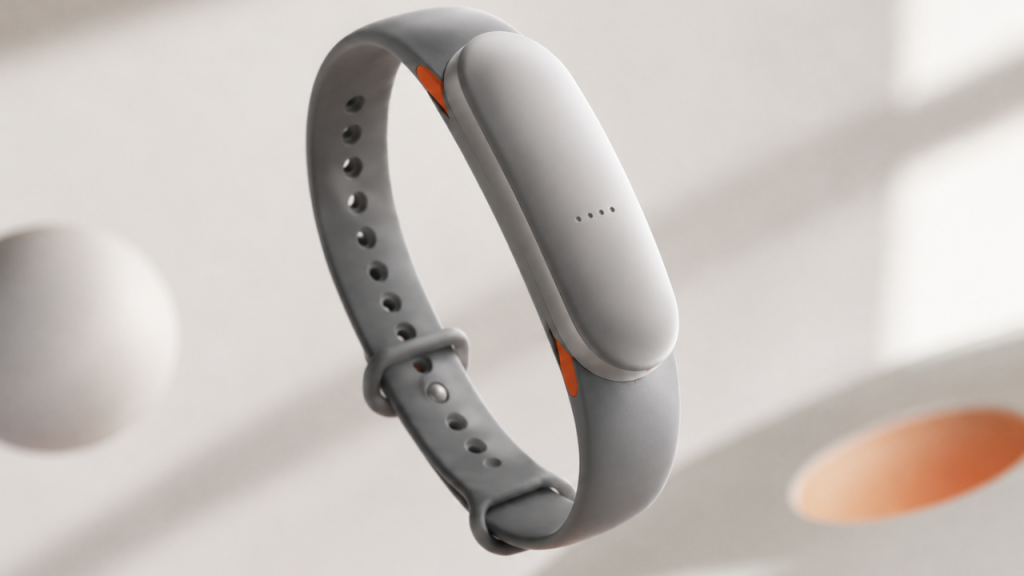
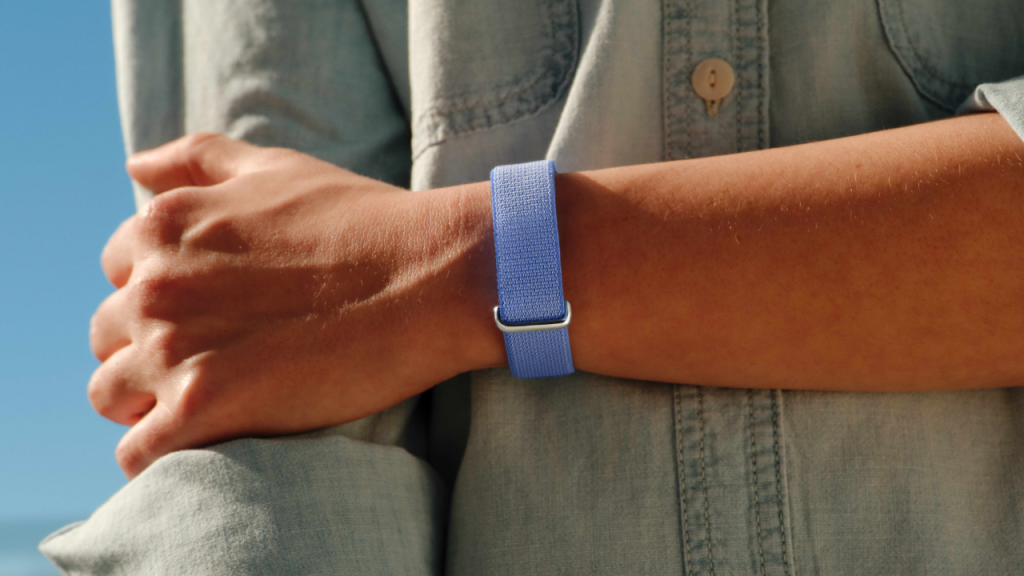
The Google Fitbit Air is a small, lightweight fitness tracker with no screen. It is designed to sit quietly on your wrist and track your health in the background. Instead of checking stats directly on the device, users view their data inside the Google Health app on their phone.
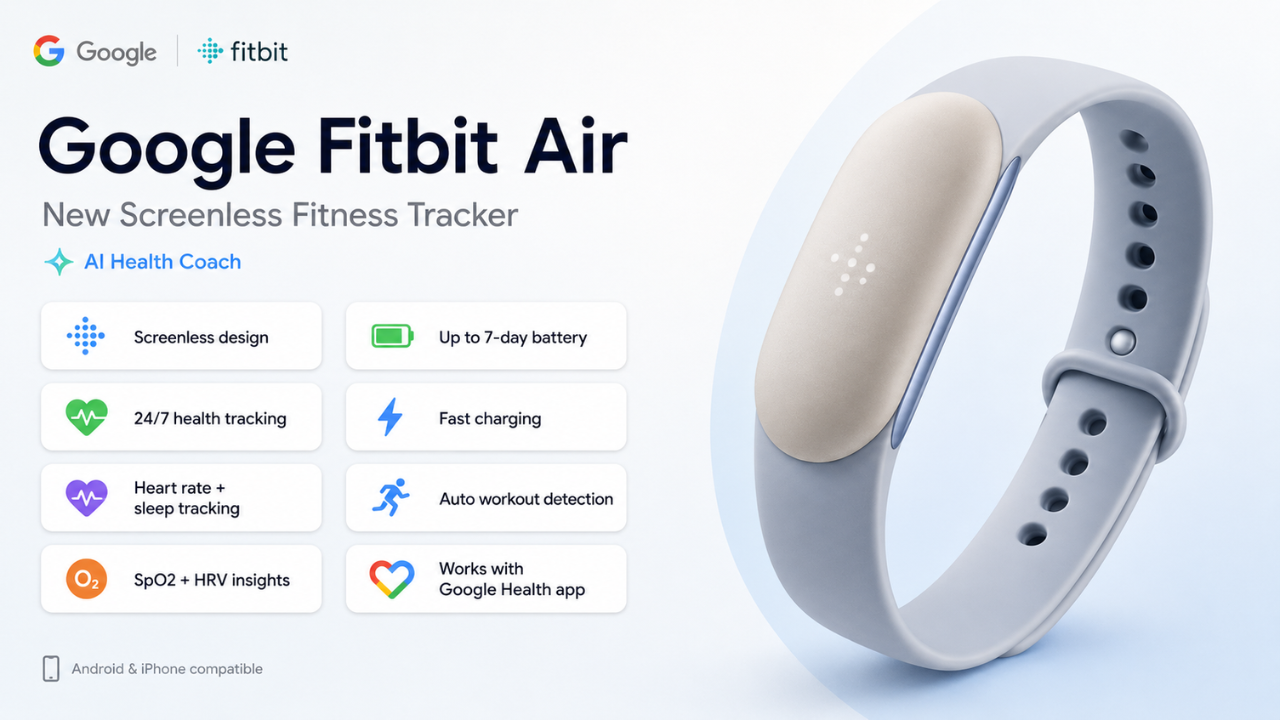
Google says the Fitbit Air is its smallest tracker yet and is made for comfortable 24/7 health monitoring. It tracks key wellness data such as heart rate, sleep, activity, SpO2, resting heart rate, heart rate variability, sleep stages, and heart rhythm monitoring with Afib alerts.
This is clearly Google’s answer to screenless health trackers like Whoop. But there is a difference: Fitbit Air starts at a much lower entry price and connects directly with Google’s wider health platform.
Main Features of Google Fitbit Air
The Fitbit Air focuses on simple tracking rather than smartwatch-style features. There is no display, no app grid, and no heavy notification system. That is the whole point.
Key features include:
- Screenless design
- 24/7 heart rate tracking
- Sleep tracking
- SpO2 monitoring
- Skin temperature tracking
- Heart rate variability
- Heart rhythm monitoring with Afib alerts
- Automatic workout detection
- Up to one week of battery life
- Fast charging with one day of use from five minutes of charging
- Android and iOS compatibility
- Google Health app support
- Google Health Coach support through Premium
Google also says users can switch between a Pixel Watch during the day and a Fitbit Air for sleep tracking without losing continuity. That is useful because many people find smartwatches too bulky to wear overnight.
Google has officially introduced the Fitbit Air, a screenless fitness tracker built for simple 24/7 health tracking. According to the official Google Fitbit Air announcement, the device starts at $99.99 and includes three months of Google Health Premium. Readers interested in more latest wearable tech news can also check our related Mobile Verse updates.
Google Health App Replaces the Fitbit App
One of the biggest changes is that the Fitbit app is being renamed and redesigned as the Google Health app. The update begins rolling out on May 19, 2026, and existing Fitbit users do not need to download a separate app. Their current Fitbit app will update automatically.
The new Google Health app has four main tabs:
- Today
- Fitness
- Sleep
- Health
Google says the app will bring together activity, fitness, sleep, vitals, medical records, and connected app data in one place. It will also work with Health Connect, Apple Health, and Google Health APIs, helping users view more of their health data from different apps and devices.
This is a smart move, but let’s be honest: it also shows the old Fitbit era is fading. Fitbit is not disappearing, but Google is clearly making Google Health the main brand for future health tracking.
Google Health Coach: The AI Feature Behind Fitbit Air
The biggest software feature is Google Health Coach, an AI-powered coach built with Gemini. It is designed to give personalized insights for fitness, sleep, nutrition, health records, and daily wellness goals. Google says the coach will become globally available from May 19, 2026, through Google Health Premium.
The coach can help users create workout plans, understand sleep patterns, log meals, and summarize medical records. It can also use context such as fitness data, sleep metrics, nutrition, cycle tracking, location, local weather, and medical records if the user chooses to share that information.
This sounds powerful, but it should not be treated like a doctor. Google itself warns that Google Health and AI responses may be inaccurate or incomplete and are not intended to diagnose, treat, cure, prevent, or monitor diseases.
That warning matters. AI health tools are useful for guidance, but users should still speak to real healthcare professionals before making serious health decisions.
Fitbit Air Price and Availability
The Google Fitbit Air starts at $99.99 and includes a three-month Google Health Premium trial. The special edition version, co-designed with Stephen Curry, is priced at $129.99 and is expected to be available in the US from May 26, 2026. Accessory bands start at $34.99.
Google Health Premium costs $9.99 per month or $99 per year. Google says AI Pro and Ultra subscribers will also get Google Health Premium at no extra cost.
For UK readers, Google has not made every regional price detail equally clear yet, so it is better not to guess a UK price. Do not publish a fake converted price as fact. That is how weak tech blogs lose trust.
Is Fitbit Air Better Than a Smartwatch?
Fitbit Air is not trying to replace a smartwatch. It is for people who want health tracking without another screen on their wrist.
A smartwatch is better if you want:
- Calls
- Notifications
- Apps
- Music controls
- Maps
- On-wrist display
- Contactless payments
Fitbit Air is better if you want:
- Simple health tracking
- Sleep tracking
- Lightweight design
- Fewer distractions
- Longer battery life
- AI-powered health insights
- A cheaper entry point than most smartwatches
For many users, the best setup could be using a Pixel Watch or Apple Watch during the day and Fitbit Air at night for sleep and recovery tracking.
Why This Launch Matters
The Google Fitbit Air matters because it shows where wearable tech is going next. The future is not just about bigger smartwatch screens. It is about passive tracking, AI coaching, and health data being pulled into one app.
Google is also targeting people who think smartwatches are too expensive, too distracting, or too bulky. A screenless tracker at this price could attract casual users, fitness beginners, sleep-tracking fans, and people who want health insights without wearing a full smartwatch.
But the real product is not just the Fitbit Air. The real product is the Google Health ecosystem. Fitbit Air collects the data. Google Health organizes it. Google Health Coach explains it.
That is the bigger story.
Should You Buy Google Fitbit Air?
The Google Fitbit Air looks like a good option if you want a simple fitness tracker with strong health tracking and do not care about having a screen. It is especially interesting for users who already use Fitbit, Pixel Watch, or Google services.
However, you should wait for real-world reviews before buying if accuracy matters to you. Battery life, sensor performance, AI coaching quality, and app reliability need proper testing. Launch claims are useful, but they are still company claims.
Buy it if you want a lightweight tracker for sleep, recovery, and basic health monitoring.
Skip it if you want smartwatch features, a display, notifications, or full control from your wrist.
Final Verdict
Google Fitbit Air is one of the most interesting wearable launches of 2026 so far. It brings Fitbit back to its simple fitness-tracking roots while connecting it to Google’s bigger AI health strategy.
The screenless design will not suit everyone, but that is not a weakness. It is the point. Fitbit Air is made for users who want health data without smartwatch distractions.
For Mobile Verse readers, this is a strong topic because it combines Google, Fitbit, AI, health tracking, wearables, and buyer interest in one story. Publish this one first.
FAQs
What is Google Fitbit Air?
Google Fitbit Air is a screenless fitness tracker that monitors health and wellness data such as heart rate, sleep, SpO2, activity, and heart rhythm.
Does Fitbit Air have a screen?
No. Fitbit Air has a screenless design. Users check their health data through the Google Health app on their phone.
How much does Google Fitbit Air cost?
Google Fitbit Air starts at $99.99 and includes a three-month Google Health Premium trial.
When does the Google Health app launch?
The Google Health app starts rolling out to existing Fitbit users on May 19, 2026 as an automatic app update.
Is Google Health Coach free?
Google Health Coach is part of the Google Health Premium subscription, which costs $9.99 per month or $99 per year.