Introduction
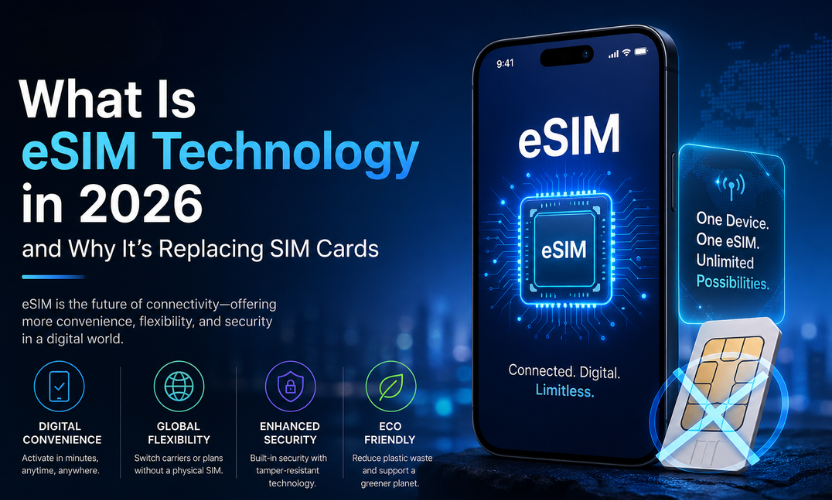
The way we connect our smartphones to mobile networks is changing fast. In 2026, in simple words, eSIM technology removes the need for a physical SIM card.
Instead of inserting a small plastic card into your phone, you can now activate a mobile plan digitally within seconds. This shift is not just about convenience—it is shaping the future of smartphones, wearables, and even connected devices.
In simple words, eSIM removes the need for a physical SIM card. So, what exactly is eSIM, and why is it taking over?
What Is eSIM Technology?
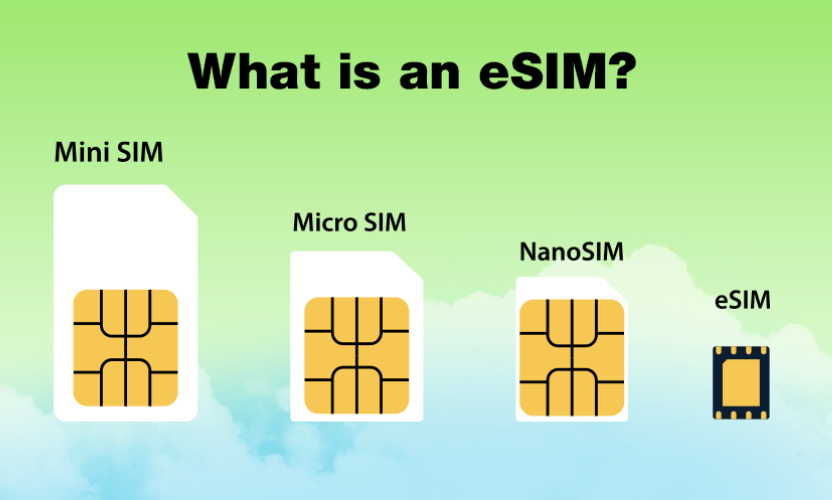
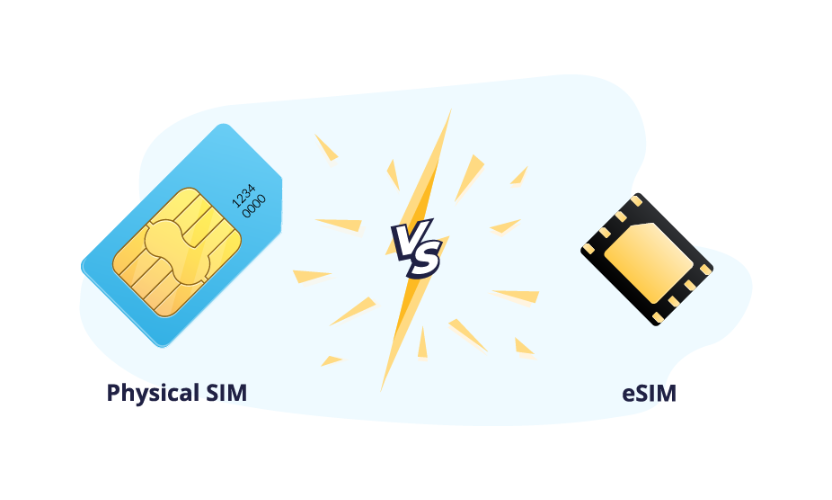
eSIM (embedded SIM) is a digital SIM that is built directly into your device. Unlike traditional SIM cards, it does not need to be physically inserted or removed. For example, users can switch networks without changing any hardware.
With eSIM technology, users can:
- Activate mobile plans remotely
- Switch carriers without changing SIM cards
- Store multiple network profiles on one device
This makes it much more flexible compared to the old system.
How eSIM Works in 2026
In 2026, eSIM has become smarter and easier to use. Here’s how it works:
- Your device already contains an embedded chip
- You scan a QR code or download a network profile
- Your carrier activates the plan instantly
Because everything is digital, there is no need to visit a store or wait for a SIM card delivery. As a result, activation becomes instant and hassle-free.
Why eSIM Technology Is Replacing SIM Cards
1. Convenience and Flexibility
With eSIM technology, switching networks is quick and hassle-free. You no longer need to swap SIM cards physically.
2. Better for Travel
Travellers can easily switch to local carriers without buying a new SIM. This reduces roaming costs significantly.
3. Supports Multiple Profiles
You can use multiple numbers on the same phone, In addition, users can manage multiple profiles easily. such as:
- Work number
- Personal number
- International plan
4. More Durable Devices
Removing the SIM tray allows manufacturers to design:
- Slimmer phones
- More water-resistant devices
5. Eco-Friendly Solution
eSIM reduces plastic waste and packaging, making it a more sustainable option. Therefore, switching carriers is no longer complicated.
eSIM Technology in Modern Devices
In 2026, eSIM is widely used across different devices:
- Smartphones (iPhone, Samsung Galaxy, Google Pixel)
- Smartwatches and fitness trackers
- Tablets and laptops
- IoT devices like smart cars and home systems
Many new flagship phones are now eSIM-only, completely removing the SIM slot.
Challenges of eSIM Technology
While eSIM technology offers many advantages, there are still some limitations:
- Not all carriers fully support eSIM yet
- Switching devices can be slightly complex
- Some users prefer physical SIM for flexibility
However, these issues are improving rapidly as adoption grows worldwide.
Future of eSIM Technology
The future of SIM-free technology looks promising. In the coming years, we can expect:
- Global eSIM adoption by all major carriers
- Faster activation with AI-based setup
- Integration with smart homes and connected cars
- Fully SIM-less smartphones becoming the norm
As technology evolves, eSIM system will likely become the only option for mobile connectivity. Overall, eSIM is expected to dominate mobile connectivity in the coming years.
If you’re interested in future mobile innovations, you should also explore our detailed guide on 5G vs 6G technology differences to understand how connectivity is evolving alongside eSIM.
For a deeper technical explanation, you can visit to learn how global standards are shaping eSIM adoption.
Conclusion
eSIM is clearly changing how we use mobile networks today. It offers more flexibility, convenience, and better device design. Therefore, it is not just a trend but a long-term shift in mobile technology. Overall, as more brands adopt this system, eSIM will soon replace traditional SIM cards completely.
FAQs About eSIM Technology
1. Is eSIM better than a physical SIM?
Yes, eSIM is more convenient, flexible, and future-proof compared to traditional SIM cards.
2. Can I use eSIM and physical SIM together?
Many devices support dual SIM functionality, allowing both eSIM and physical SIM.
3. Is eSIM available worldwide?
Most major countries support eSIM, but availability depends on the carrier.
4. Can I switch phones easily with eSIM?
Yes, but the process depends on your carrier. Many now offer quick transfer options.
5. Are eSIM-only phones the future?
Yes, many brands are moving toward eSIM-only devices to simplify design and improve performance.
To better understand how the eSIM system is evolving globally, you can explore this detailed guide from the GSMA. For example, it explains how digital SIM systems are standardised and adopted by mobile networks worldwide. In addition, it highlights why embedded SIM is becoming essential for modern smartphones and connected devices. Therefore, it is clear that eSIM is playing a key role in the future of connectivity.