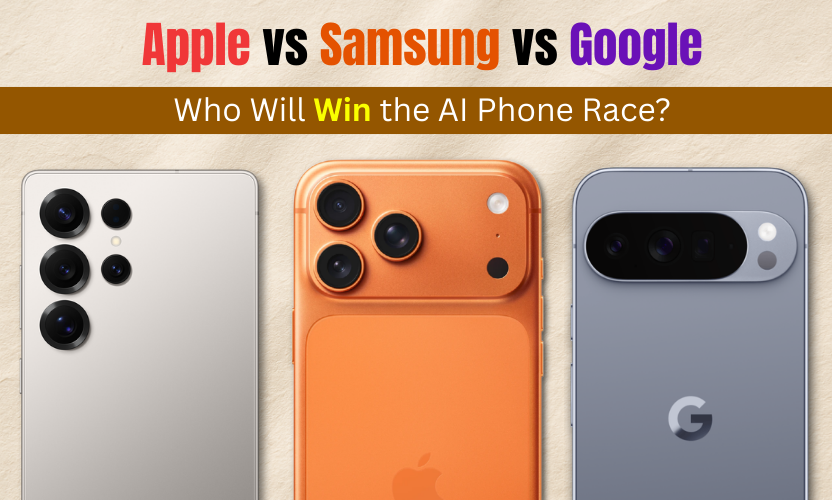
Apple vs Samsung vs Google: Who Will Win the AI Phone Race?
 By Inflix
 Artificial intelligence is no longer a bonus feature in smartphones; it’s now the core battleground in the AI phone race. Apple, Samsung, and Google are racing to dominate AI-powered mobile technology, and the competition is getting aggressive.
The question is simple: who will actually win the AI phone race?
Let’s break it down logically.
Why the AI Phone Race Matters in 2026
Smartphones are now deeply integrated with AI in areas like:
- Photography
- Voice assistants
- Real-time translation
- Battery optimization
- Security
- On-device processing
Unlike traditional hardware wars, where specifications like megapixels and RAM were key, today’s competition is about intelligence. It’s AI that drives how fast, smart, and personalized your phone can be.
If you want to understand where the mobile industry is heading, read our guide on upcoming technology trends 2026 to see how AI dominates future devices.
Apple’s Position in the AI Phone Race
Apple doesn’t rush features. It integrates them slowly but deeply, ensuring tight hardware-software integration.
Apple’s On-Device AI in the AI Phone Race
Apple’s strength is its tight control over both hardware and software. With its custom silicon (A-series and M-series chips), Apple focuses heavily on:
On-device AI processing
Privacy-first machine learning
Smart Siri improvements
AI-powered photo editing
Context-aware suggestions
Apple avoids heavy cloud dependency, reducing latency and increasing privacy. However, this slower approach may limit innovation compared to more aggressive competitors.
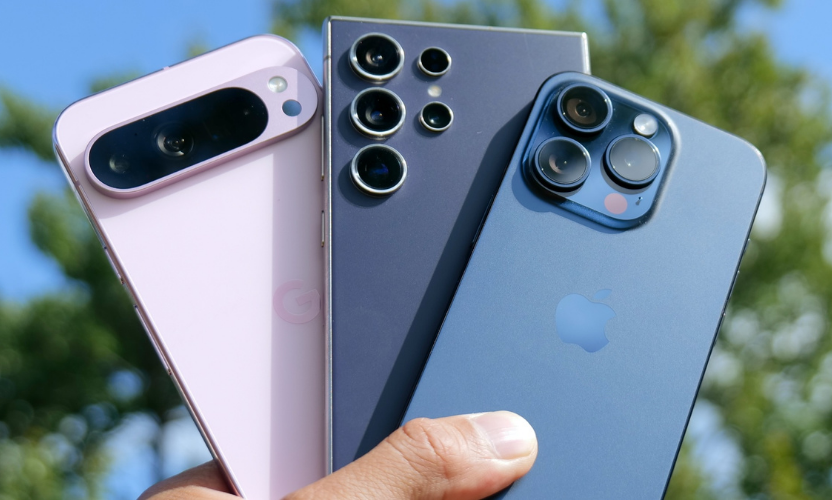
Apple’s Strengths in the AI Phone Race
- Strong ecosystem control
- Powerful neural engines
- High security standards
- Long-term software support
Weaknesses of Apple in the AI Phone Race
- Slower AI feature rollout
- Limited customization
- Less experimental compared to Google
Apple plays the long game. It focuses on stability over hype.
Samsung’s Strategy in the AI Phone Race
Samsung took a bold step by introducing Galaxy AI across its flagship lineup.
Galaxy AI Features in the AI Phone Race
Samsung’s AI features include:
- Live call translation
- AI photo editing
- Generative image tools
- AI writing assistance
- Smart note summaries
Samsung integrates AI into both hardware and cloud services, creating a hybrid system.
Strengths of Samsung in the AI Race
- Fast adoption of AI trends
- Large global Android market share
- Aggressive marketing
- Cross-device AI ecosystem
Weaknesses of Samsung in the AI Phone Race
- Heavy reliance on cloud AI
- Inconsistent updates across devices
- Sometimes gimmicky features
Samsung moves fast. But speed doesn’t always equal leadership.
Google’s Advantage in the AI Phone Race
Google has a massive advantage: AI is its core business.
Google Gemini and the AI Phone Race
Google Pixel phones are deeply connected to:
- Gemini AI models
- AI-enhanced photography
- Real-time voice transcription
- Smart replies
- AI search optimization
- Call screening
Google leads in computational photography. Its AI camera processing consistently beats competitors in natural image results.
If you’re interested in how AI shapes mobile apps, read artificial intelligence in mobile apps to understand the bigger ecosystem impact.
Strengths of Google in the AI Race
- Deep AI research expertise
- Best-in-class AI camera processing
- Native Android integration
- Advanced generative AI tools
Weaknesses of Google in the AI Phone Race
- Smaller hardware market share
- Ecosystem not as locked-in as Apple
- Tensor chips still behind Apple silicon in raw power
Google is the smartest AI company. But being smart isn’t the same as winning market dominance.
Hardware vs Software: The Real Battlefield
The AI race isn’t just about software.
It depends on:
- Chipset neural engines
- RAM optimization
- Edge computing
- Cloud infrastructure
- Battery efficiency
Apple dominates chip performance.
Google dominates AI research.
Samsung dominates scale and distribution.
The winner will be the brand that combines all three.
AI Privacy: The Deciding Factor?
Consumers are becoming more aware of data usage.
Apple emphasizes privacy-first messaging.
Google relies on cloud AI models.
Samsung uses a hybrid approach that blends both on-device and cloud AI.
Future AI success may depend on how brands balance intelligence with privacy.
For deeper insight into mobile optimization and AI evolution, check our post on mobile-first indexing and how mobile platforms are adapting.
Market Positioning in 2026
Let’s be brutally honest:
- Apple leads in premium ecosystem loyalty.
- Samsung leads in Android market share.
- Google leads in AI intelligence innovation.
But winning the AI phone race requires:
- Mass adoption
- Seamless AI integration
- Strong chip performance
- User trust
Right now, no brand dominates all four categories completely.
Who Is Actually Winning the AI Phone Race?
If we judge by:
AI Innovation → Google is ahead.
Hardware + AI optimization → Apple is ahead.
Market reach + feature speed → Samsung is ahead.
The real winner will be the company that:
- Perfects on-device AI
- Reduces cloud dependency
- Delivers meaningful AI (not gimmicks)
- Maintains privacy
At this stage, Google is leading in pure AI capability.
Apple is leading in AI stability and integration.
Samsung is leading in AI feature expansion.
The race is far from over.
Final Verdict
There is no clear winner yet.
But if the competition continues at this pace:
- Google may lead innovation.
- Apple may dominate premium AI users.
- Samsung may control global AI adoption.
The AI phone race will define the next decade of smartphones. This is no longer about cameras or displays.
It’s about intelligence.
And intelligence wins markets.