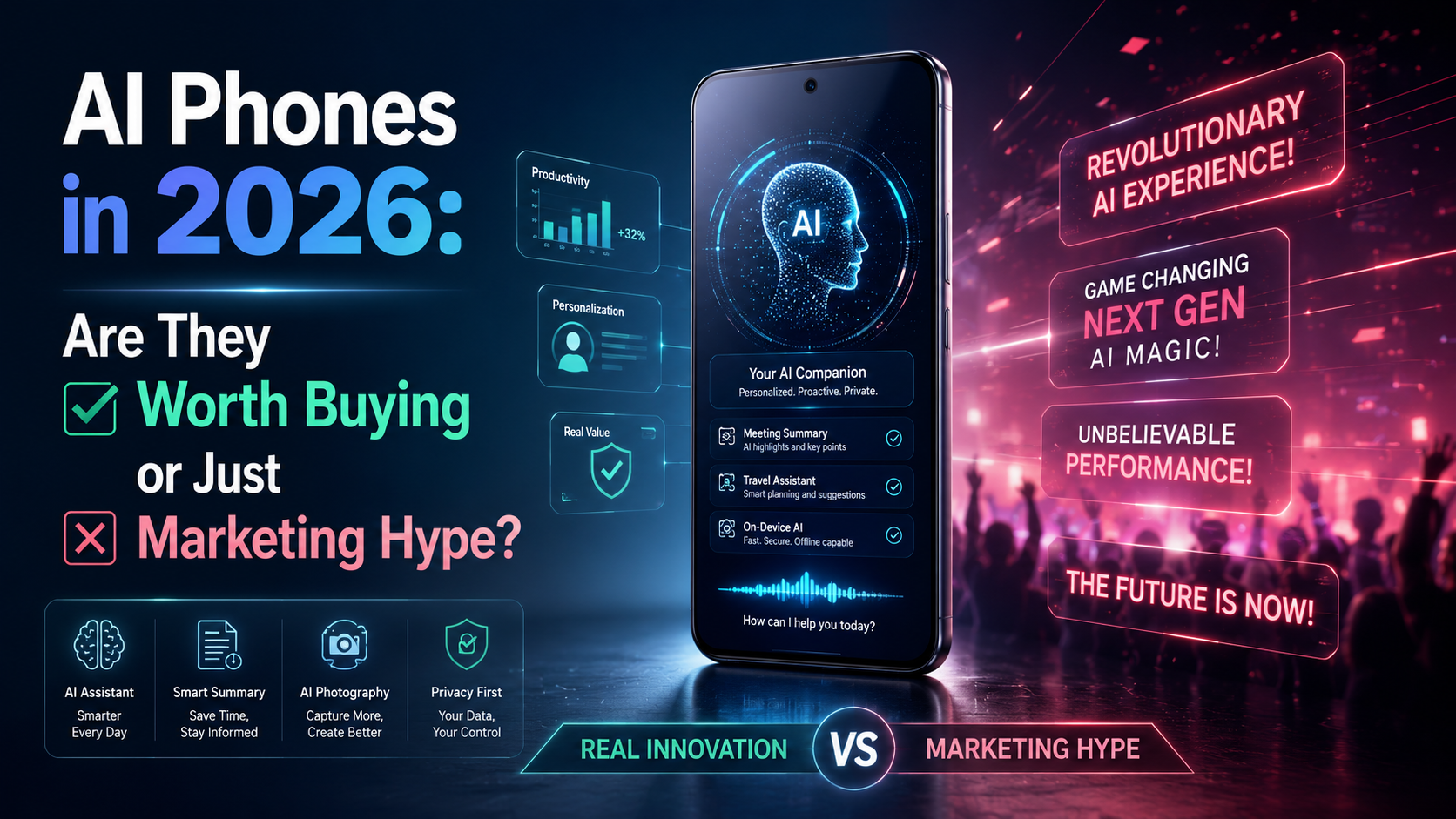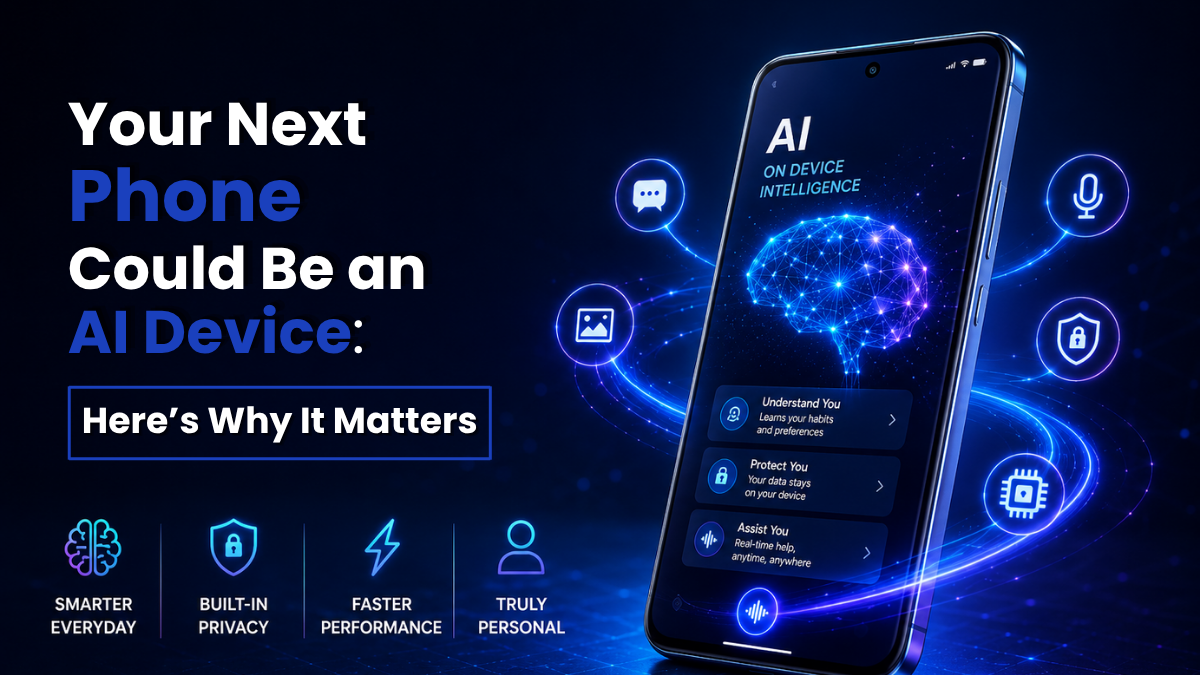
Your Next Phone Could Be an AI Device: Here’s Why It Matters
 By M.Salman
AI device technology is quickly changing the way we use smartphones. Your next phone may not just help you call, text, browse, and take photos. Instead, it could understand your needs, improve your photos, translate conversations, write messages, and help you complete everyday tasks faster.
That is why your next phone could be more than a smartphone. It could be an AI device.
Major tech companies are already moving in this direction. Apple says Apple Intelligence is built into iPhone, iPad, Mac, and Vision Pro with a focus on everyday usefulness and privacy. Google also highlights Gemini Nano for Android as an on-device AI model that can work without sending everything to the cloud, which can help with privacy, speed, and offline use. Samsung has also positioned its latest Galaxy AI phones around proactive and adaptive AI features designed to reduce the number of steps users need to complete tasks.
So, what does this mean for normal users? Let’s explain it in simple words.
What Is an AI?
An AI device is a gadget that uses artificial intelligence to understand information, make suggestions, automate tasks, and improve how you use the device.
In the past, phones mostly waited for your commands. You opened an app, typed something, searched manually, edited photos yourself, or copied information from one place to another.
However, an AI phone can do more. It can help write a reply, summarise a long message, remove unwanted objects from photos, translate conversations, organise information, and even understand what is happening on your screen.
In simple terms, an AI device does not just respond. It assists.
Why Your Phone Could Become an AI Device
The biggest reason is convenience. People want phones that save time and reduce effort. As a result, smartphone brands are adding AI features directly into the phone experience.
For example, Google’s Gemini Nano is designed for on-device AI experiences, meaning some AI tasks can happen locally on the phone without needing a constant internet connection. This matters because local AI can be faster, cheaper to run, and better for privacy-focused use cases.
In addition, Samsung’s Galaxy AI direction shows how AI can help with planning, finding information, capturing content, and editing media with fewer steps.
Meanwhile, Apple Intelligence is being built across Apple devices, which shows that AI is becoming part of the wider device ecosystem, not just a single app.
What Can an AI Phone Actually Do?
An AI phone can make everyday tasks easier in many practical ways.
For example, it can help you write better messages and emails. Instead of spending time thinking about the perfect reply, you can ask your phone to make your message clearer, shorter, or more professional.
It can also summarise long articles, notes, and conversations. Therefore, instead of reading everything line by line, you can quickly understand the main points.
AI can improve photos and videos too. Many modern phones already use AI for better night shots, portrait effects, object removal, background blur, and image enhancement.
In addition, AI can help with translation. This is useful for travellers, business users, students, and anyone who speaks with people in different languages.
Another important feature is smart search. Instead of searching through apps manually, an AI phone may help you find photos, files, messages, or settings using natural language.

Why AI Makes Better
One of the most important changes is on-device AI.
This means the phone can process some AI tasks directly on the device instead of sending everything to online servers. That matters for three big reasons.
First, it can improve privacy because less personal information needs to leave your phone.
Second, it can improve speed because the phone does not always need to wait for cloud processing.
Third, it can help some features work even when your internet connection is weak or unavailable.
However, not every AI feature works fully on-device. Some advanced tasks may still need cloud support. Therefore, when buying an AI phone, it is important to check which features work locally and which need an internet connection.
AI Phones Could Change How We Use Apps
Today, we open apps for almost everything. We open one app for messages, another for photos, another for notes, another for shopping, and another for navigation.
However, AI phones may reduce the need to jump between apps so often.
For example, instead of opening multiple apps to plan a trip, your phone may help compare dates, summarise booking emails, suggest routes, and organise your schedule.
As a result, the phone becomes less like a screen full of apps and more like a smart assistant that connects everything together.
This does not mean apps will disappear. Instead, apps may become more connected through AI.
Why Device Matters for Everyday Users
AI phones are not only for tech experts. They matter because they can help normal users do simple things faster.
Students can summarise notes, translate content, and organise study material.
Business users can write emails, manage meetings, and understand long documents more quickly.
Content creators can edit photos, create captions, improve videos, and generate ideas.
Travellers can translate signs, understand local information, and plan routes more easily.
Older users may also benefit from simpler voice commands, smarter accessibility tools, and easier phone navigation.
Overall, the real value of an AI device is not just having “cool features”. The value is making technology easier to use.
Should You Upgrade Just for AI?
Not always.
AI features are exciting, but they should not be the only reason to buy a new phone. You should also look at battery life, camera quality, software updates, storage, display, durability, and price.
However, if you are already planning to upgrade, AI support is now worth considering. A phone with strong AI features may feel more useful over the next few years than a phone with only basic performance improvements.
In addition, check whether the AI features are available in your region and language. Some tools may launch first in selected countries or on selected models.
Things to Check Before Buying an AI Phone
Before buying your next AI device, check these points:
- AI Features: Does the phone offer writing tools, photo editing, translation, summaries, and smart assistant features?
- On-Device AI: Can it run some AI tasks directly on the phone?
- Privacy Controls: Can you manage what data is used?
- Software Updates: Will the phone receive long-term updates?
- Battery Life: Do AI features affect battery performance?
- Storage and RAM: Does the phone have enough power for future features?
- Real Usefulness: Are the AI tools actually helpful, or are they just marketing buzzwords?
Are AI Phones Safe to Use?
AI phones can be safe, but users should still be careful.
Because AI tools may process personal messages, photos, voice commands, and documents, privacy settings matter. Therefore, always review your phone’s AI settings and app permissions.
Also, remember that AI can make mistakes. It may summarise something incorrectly, suggest the wrong reply, or misunderstand context. So, you should always check important information before sending, sharing, or relying on it.
AI is helpful, but it should not replace common sense.
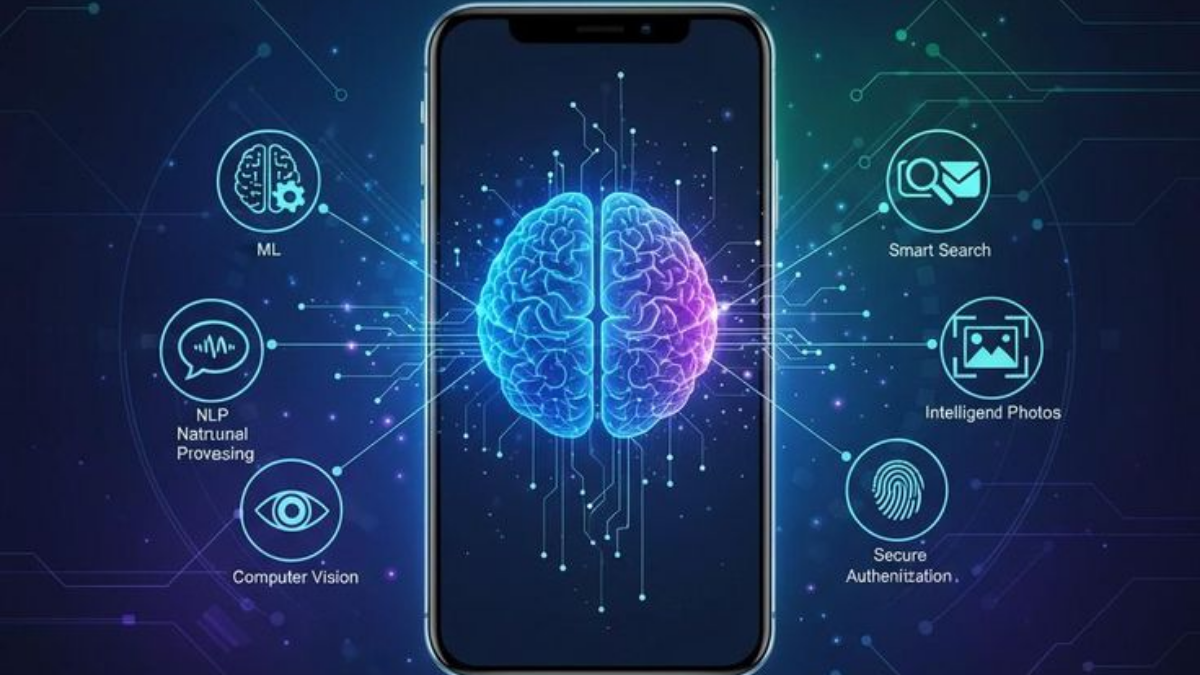
The Future of Smartphones Is More Personal
The future phone will not only be faster. It will be more personal.
It may learn how you use your device, understand your daily habits, and help you complete tasks with fewer taps. For example, it could remind you about important messages, organise your travel details, improve your photos automatically, and suggest useful actions at the right time.
This is why AI devices matter. They are not just another trend. They are changing the way phones work.
Final Thoughts
Your next phone could be an AI device because the smartphone industry is moving toward smarter, more helpful, and more personalised experiences.
However, the best AI phone is not simply the one with the most features. It is the one that makes your daily life easier, protects your privacy, performs well, and continues to improve through software updates.
So, before buying your next phone, do not only ask about the camera, battery, or display. Ask what the phone can intelligently do for you.
Because the next generation of smartphones will not just be smart.
They will be helpful.
You can also learn more about mobile AI developments from official technology sources such as Apple Intelligence and Android’s Gemini Nano developer page.
FAQs
What is an AI?
An AI device is a gadget that uses artificial intelligence to understand tasks, make suggestions, automate actions, and improve the user experience.
Is an AI phone different from a normal smartphone?
Yes. A normal smartphone mainly runs apps and follows commands. An AI phone can assist with writing, summarising, translating, editing photos, searching information, and automating everyday tasks.
Does an AI phone need internet all the time?
Not always. Some AI features can work on-device, while others may need cloud processing and an internet connection.
Are AI phones good for privacy?
They can be, especially when AI tasks are processed directly on the device. However, privacy depends on the phone brand, settings, apps, and how your data is handled.
Should I buy an AI phone now?
If you are already planning to upgrade, an AI phone is worth considering. However, you should still compare battery life, camera quality, software updates, price, and long-term support.
To explore more mobile technology guides, smartphone tips, and future device trends, visit our latest posts on Mobile Verse.