AI Phones Are Coming: Will 2026 Be the Year Smartphones Become Truly Smart?
 By M.Salman
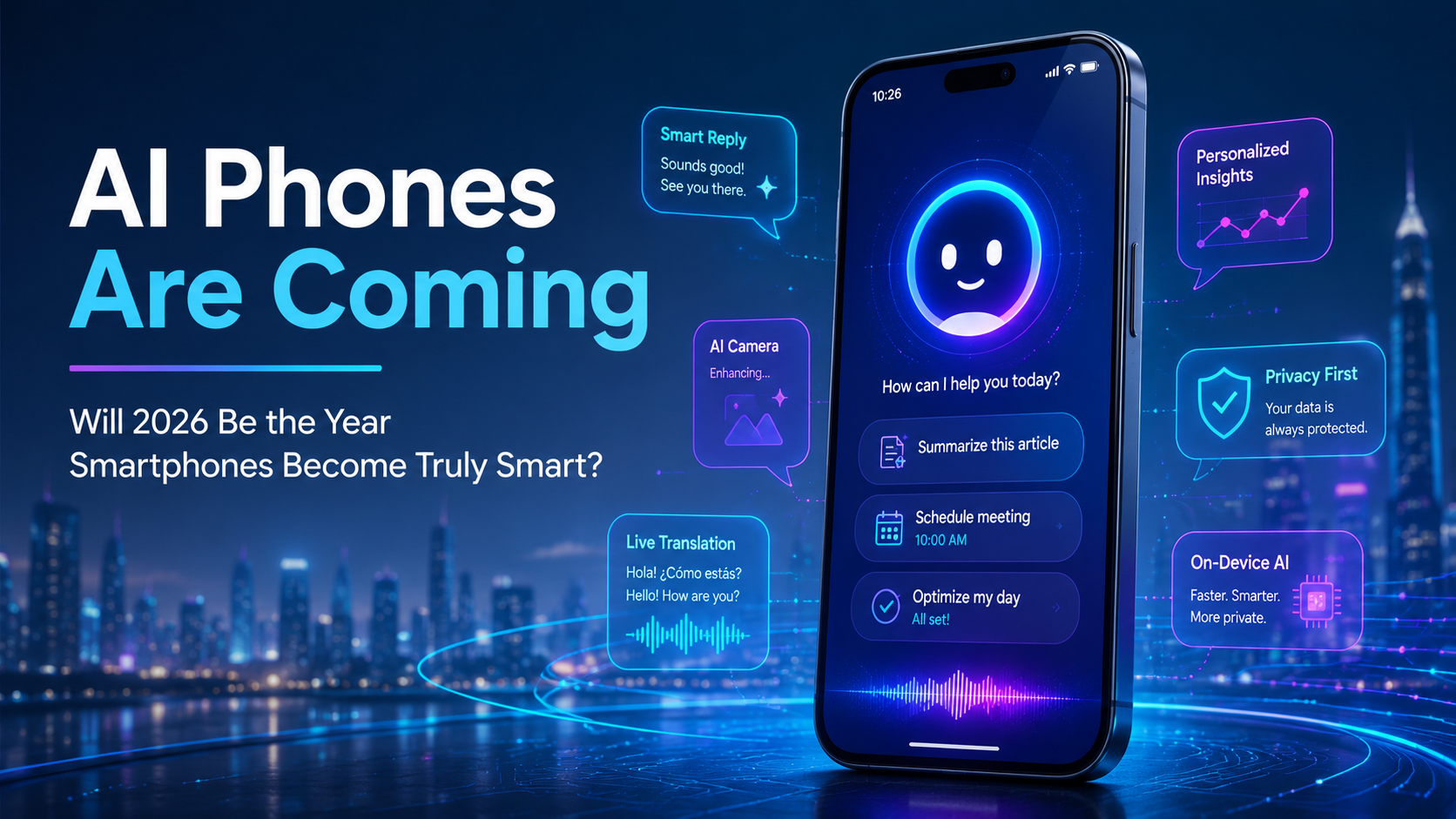
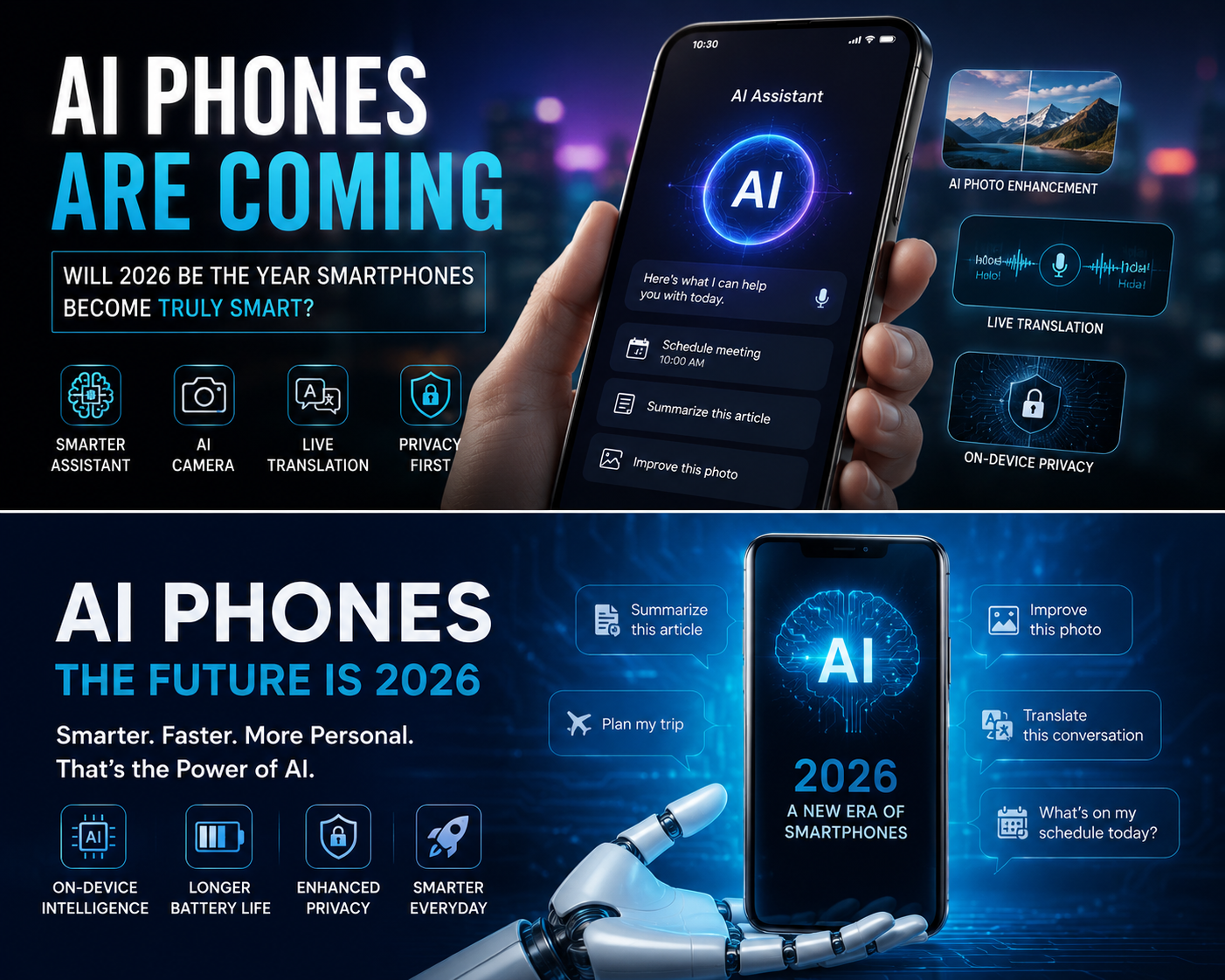
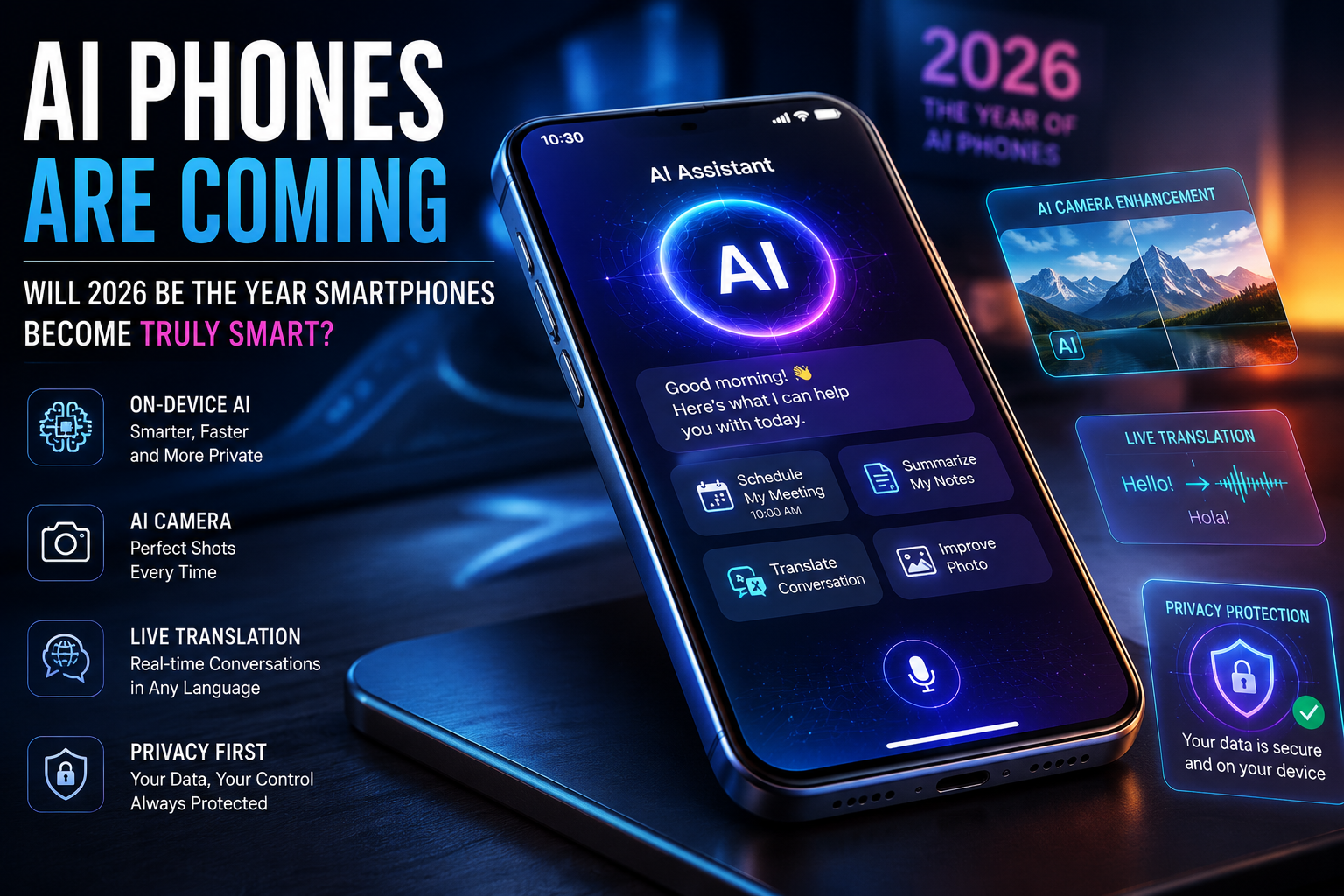
 AI phones are no longer just a future idea. In 2026, smartphones are becoming more personal, more helpful and more intelligent because artificial intelligence is now being built directly into cameras, assistants, keyboards, search tools and privacy features. As a result, the next generation of smartphones may finally feel truly smart.
Now, that is starting to change.
In 2026, AI phones are becoming one of the biggest topics in mobile technology. Apple, Samsung, Google and other smartphone brands are no longer treating artificial intelligence as a small extra feature. Instead, AI is becoming part of the phone’s camera, keyboard, assistant, search, security and daily productivity tools.
Samsung already promotes Galaxy AI as a system for creativity, communication, productivity and personal assistance, with features such as Photo Assist, Interpreter, Writing Assist, Now Brief and context-aware suggestions. Apple also continues to expand Apple Intelligence across its ecosystem, with official updates focused on smarter software experiences for users.
So, the big question is simple: will 2026 be the year smartphones become truly smart?
The answer is: yes, but not in the way many people expect.
What Is an AI Phone?
An AI phone is a smartphone that uses artificial intelligence to understand, predict, and assist with everyday tasks. Instead of only following basic commands, it can help write messages, edit photos, summarise notes, translate speech, suggest actions, and personalise the user experience.
For example, an AI phone may help you remove an unwanted object from a photo, translate a conversation while travelling, summarise a long article, clean up your notes after a meeting or suggest the next useful action based on what is on your screen.
This is different from older voice assistants. In the past, assistants often worked only when you used exact commands. However, newer AI tools are becoming more natural. Samsung says its Bixby can understand more casual, free-flowing speech and help users with device questions, settings and web searches.
As a result, the phone is slowly moving from being a tool you control to being a helper that understands what you are trying to do.
Major smartphone brands are already moving quickly in this direction. Samsung explains how Galaxy AI helps users with communication, creativity and productivity, while Apple continues to expand Apple Intelligence across supported devices. Therefore, AI phones are becoming a real part of the smartphone market rather than just a future concept.
Why 2026 Matters for AI Phones
The year 2026 matters because AI is moving deeper into the phone itself. In earlier years, many AI features felt like demos. They were fun, but they did not always change everyday use.
Now, things are different. AI is being built into the operating system, apps, chips and cloud services. Therefore, users may not need to open a separate AI app every time they want help. Instead, AI can appear naturally inside the camera, gallery, messages, browser, notes and phone settings.
Samsung’s Galaxy AI already includes tools for photo editing, text improvement, translation, transcription and personalised daily updates. It also allows users to choose whether some AI data is processed locally on the device or in the cloud, depending on privacy preferences.
This is important because the best AI phone will not simply be the one with the most features. It will be the one that makes daily tasks easier without making the phone confusing.
AI Cameras Will Become More Useful
The camera is one of the clearest areas where AI phones are improving quickly. Smartphone cameras already use software to brighten photos, improve colours and sharpen details. However, AI takes this further.
In 2026, AI cameras can help with editing, object removal, background improvement, low-light shots and automatic scene enhancement. For everyday users, this means fewer bad photos and less time spent editing.
Samsung says its Galaxy phones use AI-powered image processing to improve clarity, colour and detail, including real-time photo optimisation. This shows how AI is becoming part of the camera experience before and after a photo is taken.
However, this also raises an important question. If AI changes a photo too much, is it still real? That is why transparency matters. Users should know when an image has been heavily edited or generated with AI.
AI Assistants Will Finally Become More Helpful
For years, phone assistants were useful for simple tasks like setting alarms, checking weather or calling contacts. However, they often struggled with natural conversation.
AI phones in 2026 are expected to make assistants more helpful because they can understand context better. Instead of saying a perfect command, users may be able to speak naturally.
For example, you could say:
“Find the hotel booking from last week and add the check-in time to my calendar.”
A truly smart phone should understand the request, find the right information and complete the action with your permission.
This is where AI phones could become genuinely useful. They may reduce the number of taps needed to get things done. In addition, they could help users who are not very technical use their phones more confidently.
On-Device AI and Privacy Will Be a Big Selling Point
One of the biggest concerns with AI phones is privacy. A smartphone contains personal messages, photos, contacts, location history, payment details and health data. Therefore, users need to know how their information is handled.
This is why on-device AI is becoming important. On-device AI means some tasks are processed directly on the phone instead of being sent to the cloud. As a result, it can be faster, more private and available even when internet access is weak.
Samsung says Galaxy AI includes on-device protection, encryption through Knox Vault and privacy settings that let users choose whether certain AI data is processed locally or in the cloud.
This could become one of the biggest differences between average AI phones and the best AI phones. People will not only ask, “What can this phone do?” They will also ask, “Where does my data go?”
AI Phones Could Change How We Use Apps
Today, most smartphone tasks happen inside apps. You open one app for food delivery, another for maps, another for email, another for shopping and another for banking.
However, AI phones could make this feel more connected. Instead of jumping between apps, users may ask the phone to complete a task across several apps.
For example, an AI phone could help plan a journey, compare travel options, message a friend and add the plan to your calendar. Meanwhile, the user stays in control and approves key actions.
This does not mean apps will disappear in 2026. However, it does mean the phone’s assistant may become the layer that connects apps together.
Battery Life and Performance Still Matter
AI sounds exciting, but it can also be demanding. If AI features drain the battery, slow the phone down or require constant internet access, users may quickly lose interest.
Therefore, phone brands need to balance AI power with everyday performance. A good AI phone should still have strong battery life, fast charging, smooth performance and long-term software support.
In other words, AI should not replace the basics. It should improve them.
For buyers, this means it is still important to compare the processor, RAM, battery size, display quality, camera hardware and update policy before choosing an AI phone.
Will Budget Phones Get AI Too?
At first, the best AI features usually arrive on flagship phones. That is normal because premium phones have stronger chips and more advanced software support.
However, AI will not stay limited to expensive phones forever. Over time, many AI features will come to mid-range and budget devices through software updates, cloud processing and lighter AI models.
This matters because most people do not buy ultra-premium smartphones. If 2026 is going to be the year AI phones become mainstream, affordable phones need useful AI features too.
The real winner will be the brand that brings practical AI to normal users, not just high-end buyers.
The Problem With AI Phones
Although AI phones are exciting, they are not perfect. There are still some challenges.
First, AI can make mistakes. It may summarise something incorrectly, misunderstand a command or edit an image in an unrealistic way. Samsung also notes that AI output may not always be accurate, complete or reliable.
Second, some features may depend on region, language, model or internet connection. This means two users with different phones may not get the same AI experience.
Third, future pricing is uncertain. Some basic AI features may remain free, while advanced features could become paid services later. Samsung says basic Galaxy AI features are free, but future releases may include enhanced or new services offered on a paid basis.
Therefore, users should not buy a phone only because of big AI marketing claims. They should look at which features are actually available, useful and supported in their region.
So, Will 2026 Be the Year Smartphones Become Truly Smart?
Yes, 2026 could be the year smartphones finally start to feel truly smart. However, this does not mean phones will suddenly become perfect personal robots.
Instead, smartphones will become smarter in smaller, practical ways. They will help users write better, edit faster, translate more easily, find information quicker and manage daily tasks with fewer steps.
The best AI phones will not be the ones that sound the most futuristic. They will be the ones that save time, protect privacy and make everyday mobile use feel simple.
Overall, AI phones are coming fast. In fact, they are already here. The real change in 2026 is that AI may stop feeling like a special feature and start feeling like a normal part of using a smartphone.
For Mobile Verse readers, this means the next phone upgrade may not only be about camera megapixels, display brightness, or battery size. It may also be about how intelligently the phone understands your needs.
For more mobile technology updates, you can also read our latest guides on smartphones and technology. These guides help readers compare new features, understand mobile trends and choose better devices.
FAQs
What are AI phones?
AI phones are smartphones that use artificial intelligence to help with everyday tasks such as photo editing, writing, translation, search, voice assistance and personal recommendations.
Are AI phones available in 2026?
Yes, many modern smartphones already include AI features. Samsung Galaxy AI, Apple Intelligence and Google’s AI tools are examples of how major brands are adding AI deeper into mobile devices.
Do AI phones work without the internet?
Some AI features can work on-device, while others need cloud processing and internet access. It depends on the phone, the feature and the brand’s software design.
Are AI phones safe to use?
AI phones can be safe when brands use strong privacy controls, encryption and clear data settings. However, users should still check privacy options and understand whether AI tasks run on-device or in the cloud.
Will AI phones replace apps?
Not completely. However, AI may reduce the need to open multiple apps manually by helping users complete tasks across apps more naturally.
Should I buy an AI phone in 2026?
Yes, if the AI features are useful for your daily needs. However, you should also consider battery life, camera quality, software updates, performance and price before buying.