iPhone Display Brightness Upgrade May Still Be Years Away, New Leak Claims
 By M.Salman
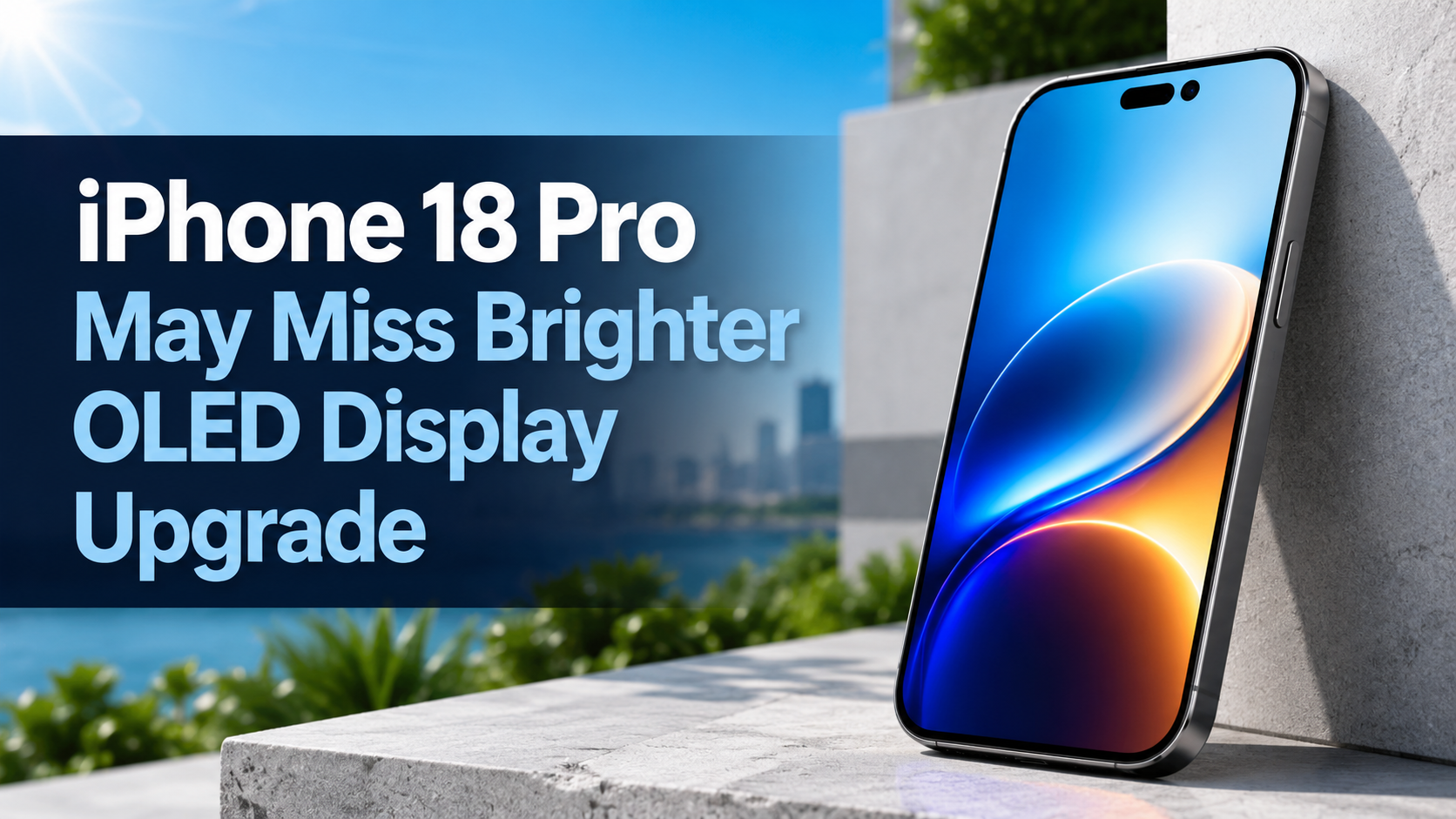
 The iPhone display brightness upgrade many Apple fans were expecting may not arrive anytime soon. A new leak suggests that Apple’s next major brightness improvement could still be years away. The iPhone 18 Pro may bring some display changes, but it may not get the big dual-layer OLED upgrade that many users were hoping for.
This does not mean the current iPhone display is poor. Apple already offers some of the brightest smartphone screens in the market. The real issue is different. Users want a screen that stays bright for longer in direct sunlight. That is where heat, battery use, and OLED technology become important.
According to a recent report from MacRumors, Chinese leaker Instant Digital claims the iPhone 18 Pro will not feature dual-layer OLED technology. The report also says Apple’s current thermal management may still limit sustained outdoor brightness on Pro iPhones.
So, the story is not just about peak brightness numbers. The bigger question is simple. Can the iPhone stay bright when you use it outside for a long time?
Why Dual-Layer OLED Matters for iPhone
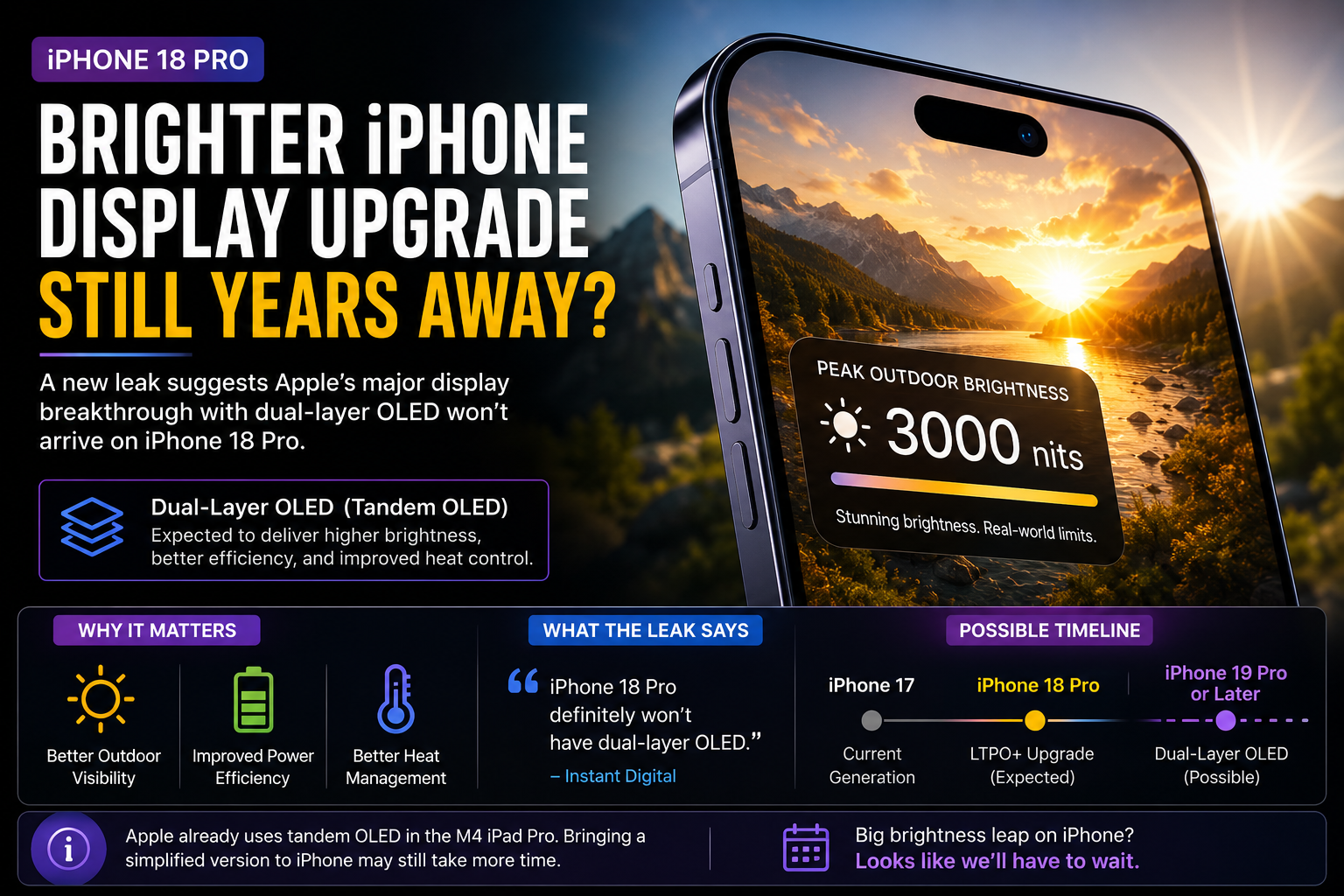
The latest iPhone display brightness upgrade leak focuses on dual-layer OLED. This technology is also known as tandem OLED. It uses more than one light-emitting layer to improve brightness and efficiency.
The leak claims that the iPhone 18 Pro will not use this display technology. That matters because dual-layer OLED could help Apple improve outdoor visibility without putting too much pressure on the battery.
Right now, iPhones can reach very high brightness for short periods. But long outdoor use is harder. Heat builds up quickly. When that happens, the display may reduce brightness to protect the phone.
That is why many users notice one common problem. The screen looks very bright at first. Then it becomes dimmer after a few minutes under strong sunlight.
A true iPhone display brightness upgrade would need to solve that issue, not just increase the peak brightness number.
Why Dual-Layer OLED Matters for iPhone
Dual-layer OLED could be a major step forward for iPhone displays. It can help the screen produce more light with better efficiency. It may also reduce stress on the OLED panel.
In simple words, the display does not need to work as hard to look bright. That can help with battery life and heat control.
Apple already uses tandem OLED technology in the M4 iPad Pro. That display combines light from two OLED panels. This helps the iPad Pro deliver high brightness and strong contrast.
But bringing the same idea to the iPhone is not easy. The iPhone is smaller. It has less room for heat control. It also sells in much higher numbers than the iPad Pro.
Apple cannot add a display technology just because it sounds impressive. Apple has to make the technology work at scale, prove it is reliable, and fit it around the iPhone’s battery and design limits.
This is probably why the iPhone display brightness upgrade may take longer than expected.
Why iPhone Outdoor Brightness Is Still Difficult
Outdoor brightness is more complicated than most people think. Many users only look at the highest brightness number. That is not enough.
Peak brightness is usually temporary. It may only last for a short time. Sustained brightness is more important in real life.
For example, you may use your iPhone outdoors for maps, camera, video recording, or social media. In these situations, the phone is already working hard. The display is bright. The processor is active. The battery is also under pressure.
When heat increases, the iPhone has to protect itself. One way to do that is by lowering screen brightness.
This is why the next big iPhone display brightness upgrade needs better thermal control. A brighter screen is useful only if it can stay bright for longer.
iPhone 18 Pro May Still Get Display Improvements
The iPhone 18 Pro may still bring display upgrades. But those upgrades may not be the huge brightness jump some users want.
Recent reports suggest that Apple may use improved LTPO+ display technology for the iPhone 18 Pro models. This could help with power efficiency and smoother display performance.
That would still be useful. Better LTPO technology can improve refresh rate control. It may also help battery life. It could make the display feel more responsive in daily use.
But this is not the same as dual-layer OLED. LTPO+ may improve efficiency, but it may not deliver a major sustained brightness boost.
So buyers should keep expectations realistic. The iPhone 18 Pro may have a better display. But based on this leak, it may not deliver the major iPhone display brightness upgrade people expected.
iPhone Display Brightness Upgrade: Should You Wait for the iPhone 18 Pro?
If you are waiting only for a much brighter iPhone display, you may be disappointed. This leak suggests the iPhone 18 Pro may not bring that major display jump.
That does not mean the iPhone 18 Pro will be a bad upgrade. It could still bring better performance, camera improvements, battery gains, and design changes. But the screen brightness upgrade may not be the main reason to wait.
If you already own a recent Pro iPhone, you should not rush your decision based on display rumors. Your current iPhone likely already has a strong OLED screen.
If you use an older iPhone, the upgrade may still make sense. You may notice better speed, camera quality, battery life, and screen performance. But do not expect a completely new display experience unless Apple confirms it.
The honest answer is clear. Wait for the iPhone 18 Pro if you want the full package. Do not wait only for the iPhone display brightness upgrade.
Why Apple May Be Taking More Time
Apple usually takes its time with major display changes. The company rarely adds new hardware just for hype. It usually waits until the technology is stable and ready for millions of devices.
Dual-layer OLED may offer clear benefits. But it may also bring challenges. It can affect cost, production, battery design, and repair complexity.
Apple also depends on display suppliers. If suppliers cannot produce enough high-quality panels, Apple may delay the feature.
This is not surprising. Apple has done this before with many technologies. The company often waits until the supply chain is ready.
That is why the iPhone display brightness upgrade may arrive later than early rumors suggested.
What This Means for iPhone Buyers
For normal users, this leak is not a big problem. Current iPhone displays are already very good. They are bright, sharp, and colour accurate.
Most users will not struggle with screen brightness indoors or in normal outdoor use. The issue mainly affects people who use their phones in strong sunlight for long periods.
This includes content creators, drivers, travellers, photographers, and users who record video outdoors. These users need better sustained brightness.
For them, dual-layer OLED would be a meaningful upgrade. It could make the iPhone easier to use outside. It could also help the screen stay bright for longer.
But until Apple confirms it, buyers should treat this as a rumor. Leaks can change. Apple’s final plans may be different.
Final Verdict
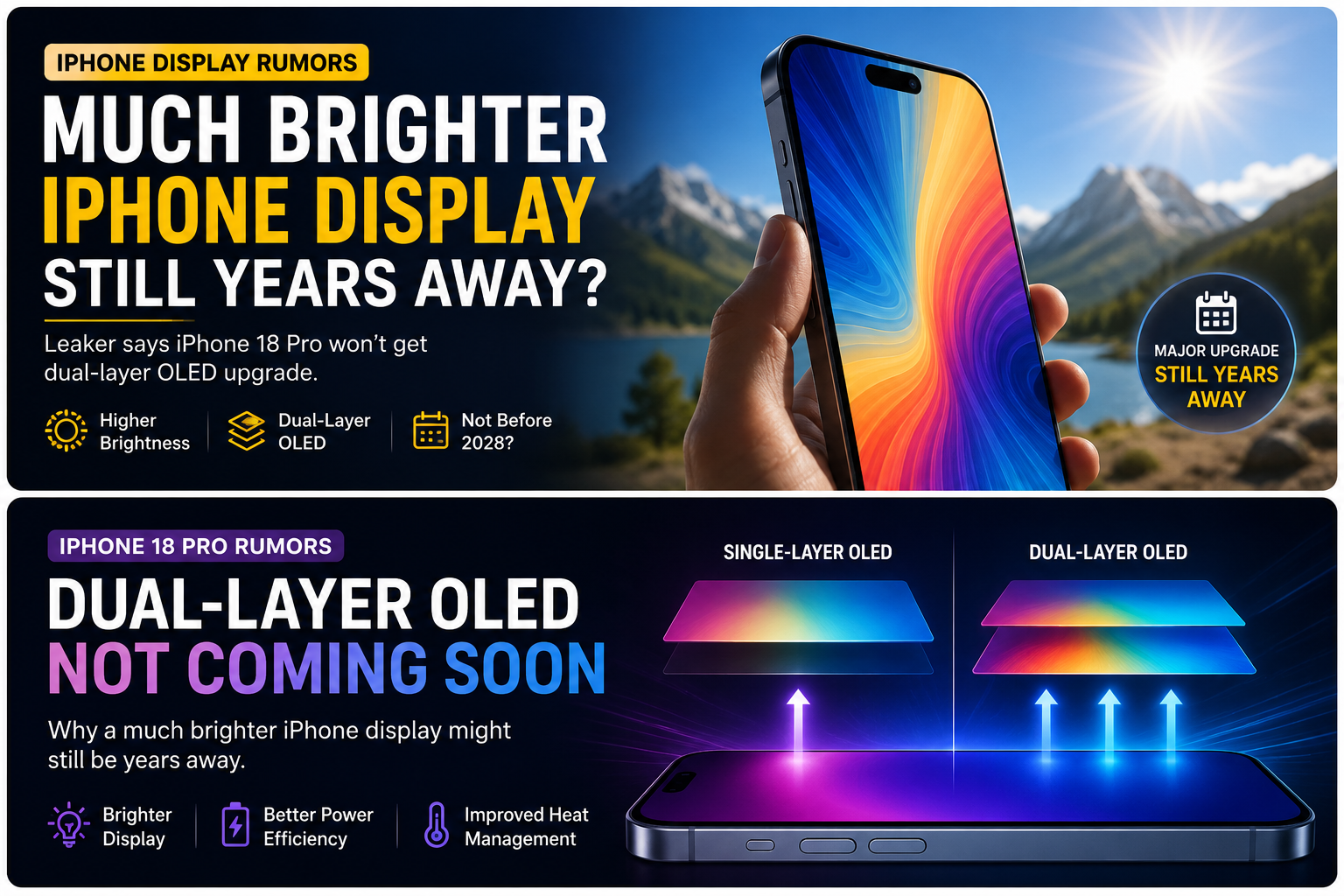
The latest leak suggests that Apple’s major iPhone display brightness upgrade may still be years away. The iPhone 18 Pro may not feature dual-layer OLED technology. That means users expecting a huge outdoor brightness improvement may need to wait longer.
This does not make the iPhone 18 Pro weak. It simply means the biggest display upgrade may not arrive with this model.
For now, Apple may focus on smaller display improvements. These could include better efficiency, LTPO+ technology, and smoother screen performance.
The real breakthrough will come when Apple can improve brightness, battery life, and heat control together. Until then, the iPhone display will keep improving step by step.
FAQs
What is dual-layer OLED?
Dual-layer OLED is a display technology that uses more than one light-emitting layer. It can improve brightness, efficiency, and heat control.
Why does iPhone brightness drop outdoors?
iPhone brightness can drop outdoors because of heat. When the phone gets hot, it may lower brightness to protect internal parts.
Is the iPhone 18 Pro still worth waiting for?
The iPhone 18 Pro may still be worth waiting for if you want overall upgrades. But do not wait only for a brighter display.
When could Apple bring dual-layer OLED to iPhone?
Current rumors suggest dual-layer OLED may still be years away for iPhone. Apple has not confirmed any launch timeline.